Flight Lieutenant Gaynor P. Williams
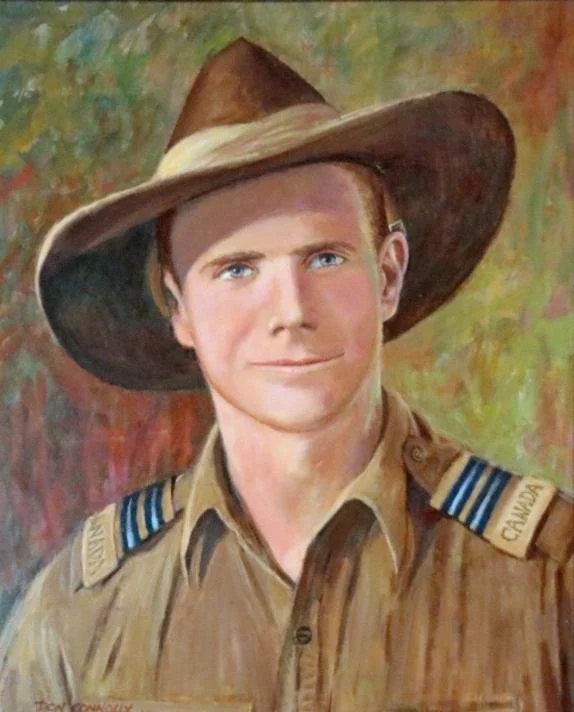
Gaynor Williams was born 22 September 1921 in Baysland, Alberta. He joined the RCAF in April 1940, graduated as a Sgt Observer and joined 240(RAF) Squadron in 1941, flying Stranraer aircraft on coastal patrols out of Scotland.
In March 1941 240 Sqn converted to Catalina aircraft and relocated to Lough Erne, Ireland. At 0410Z 26 May Sgt William’s crew departs in Catalina M/240 to search for the German Battleship Bismarck. Catalina Z/209 first sights the Bismarck but loses it in poor weather. Enroute to the reported position Sgt Williams suggests a plan of action and twenty minutes later they sight Bismarck. Closing, they encounter flak but manage to escape using low cloud and rain squalls as cover. They continued to shadow the great ship reporting its position to headquarters. After shadowing the Bismarck for five and half-hours they return to base, 20 hours after take-off.
On 8 July 1942, Gaynor Williams, now a Pilot Officer, and his crew were deployed from their home base in Scotland to search for the German battleship Tirpitz in an area off northern Norway. On completion of an unsuccessful search they landed in a small lake a few miles south of Archangel, Russia. On 10 July they were tasked to conduct a search for survivors from Convoy PQ17 that had lost 23 ships out of 33 to enemy action during the past few days. (The navigation logs and charts of this 10 July flight have been reconstructed and are on display in the Museum as part of the Air Navigator’s Display.
Later in July 1942 240 Squadron moves to Madras, India and routine patrols of the Indian Ocean follow. In 1943 F/L Williams is assigned as navigator to Lord Louis Mountbatten on his special Dakota “Sister Ann” and makes many VIP flights from New Delhi. It was here that he adopted the "Bush Hat” as protection against the Indian sun. Commenting later on his unofficial headgear Gaynor had this to say, “As far as I know I was the only Canadian airman to wear such a hat. I was the lone RCAF Canadian in New Delhi… the station commander didn’t know what Canadian airmen wore.” Gaynor returned to Canada in December 1944 and finished the war as an instructor at No. 1 Air Observer School where it had all begun for him some five years before.