Candair Argus
CL28 (CP107)
Marks I & II
The story of the Argus finds its roots in the Battle of the Atlantic during the Second World War, when allied forces realized the need for a very long range, anti-submarine patrol aircraft that could reach and patrol the mid-Atlantic. First filled by the B-24 Liberator, later by post-WW II Lancasters, Canada needed a modern submarine hunter that could face a fast-growing Soviet submarine fleet. The Argus, a Canadian modification of the Bristol Britannia, was to fill that need. In the interim, Canada acquired American Neptune sub-hunters.
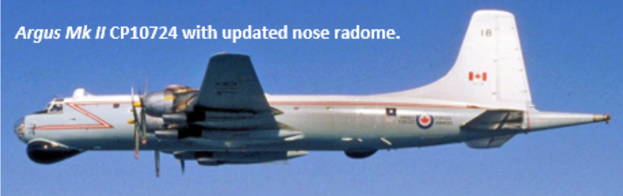
Named after the Greek mythological character Argus - who was said to have a thousand eyes, the CP-107 Argus was designed around the airframe of the Bristol Britannia airliner. Built by Canadair in Montreal, it was introduced into RCAF service in 1957. Considered at the time the most technologically advanced anti-submarine warfare aircraft in the world, it was powered by four huge Wright R-3350 engines, and featured two large bomb bays that could handle homing torpedoes, bombs or depth charges. It also had a 70-million candlepower search light mounted on the wing to help with identification of surface vessels at night. Loaded with state-of-the-art detection tools, it was easily recognizable by its obvious external features that included a large radome holding a radar antenna under its chin, and an 18-foot tail boom to isolate magnetic sensors away from the aircraft.
With a flight crew of eight and'an additional seven sensor operators, the aircraft flew missions often in excess of 20 hours. In October 1959, an Argus from 405 Maritime Patrol Squadron made Canadian aviation history by flying the longest non-stop flight up to that day, a record-breaking 4,570 miles from Hawaii to North Bay. Throughout the Cold War, the RCAF fleet of Argus made a tremendous contribution to the strategic maritime balance by conducting anti-submarine patrols for NATO in Canada's area of responsibility. During the 1962 Cuban Missile crisis, RCAF Argus typically flew six hours out to their patrol area in the Atlantic, stood eight hours "on station" patrolling their area, before making the six-hour return flight home - although their key contribution to the operation was never publicly acknowledged. Over a period of more than two decades, the Argus was flown and maintained by crews from 404, 405, 407, 415 and 449 Squadrons, mostly out of Greenwood, N.S., Comox, B.C., and Summerside, P.E.I. It was replaced in its maritime patrol role by the CP-140 Aurora in 1981.
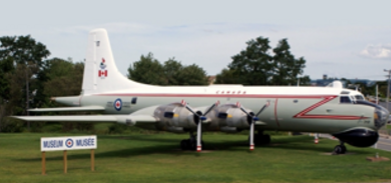
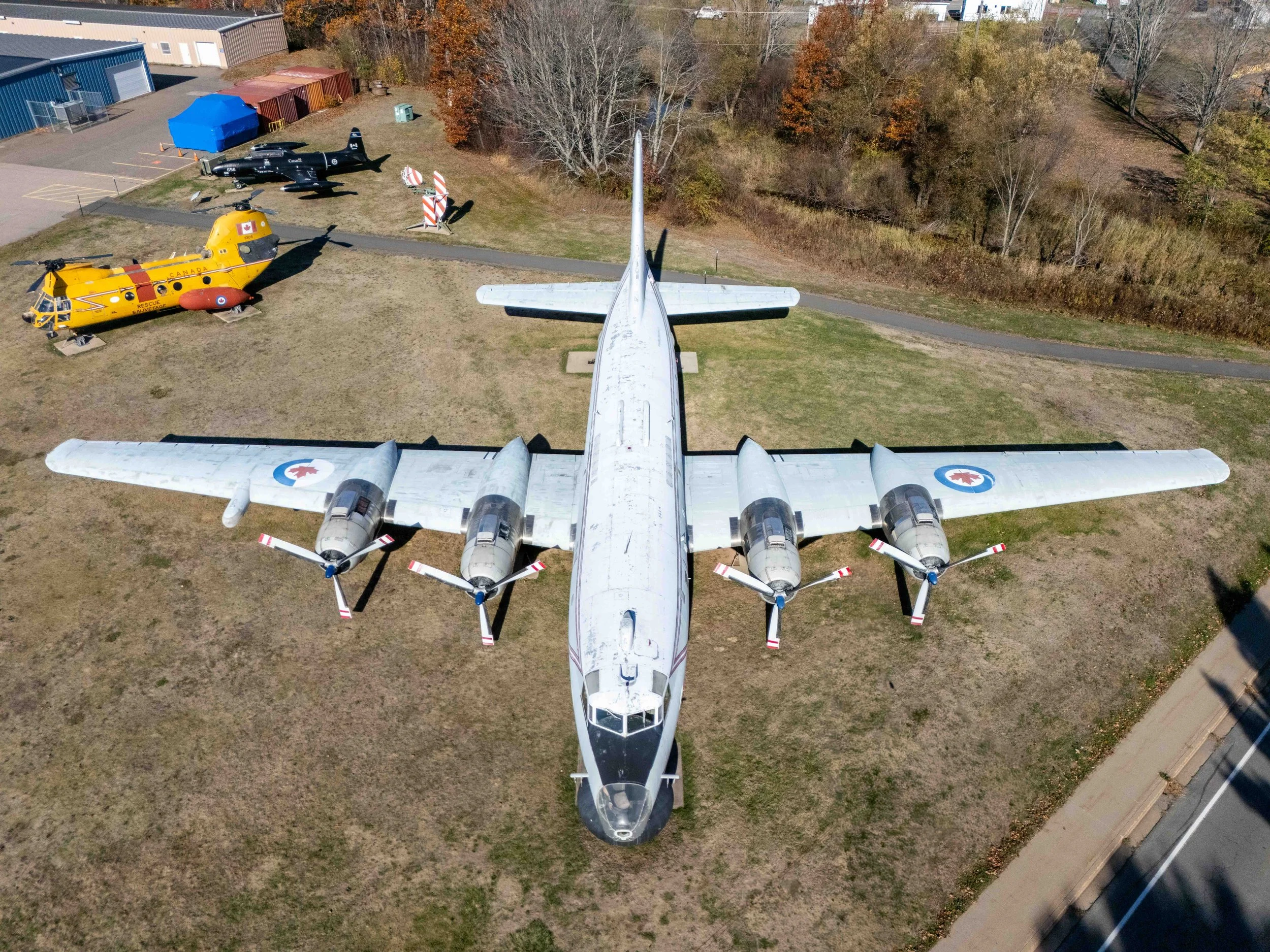
Argus in GMAM Airpark
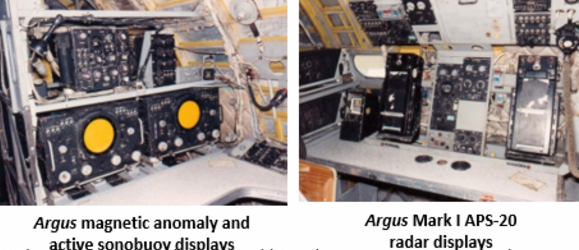
Argus Interior Panels
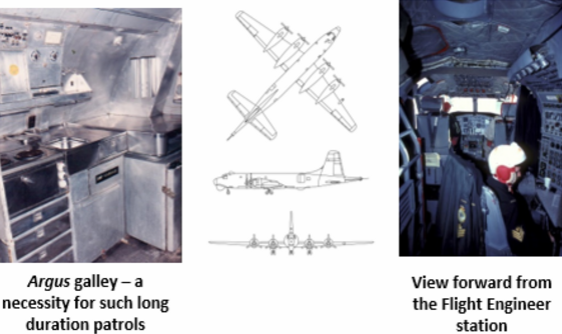
Argus Interior and overview
Aircraft Specifications
Roles: Maritime Patrol
Number built in Canada for the RCAF: 33 (13 Mk I and 20 Mk II)
Manufacturer: Canadair Ltd., Montreal, Quebec
Crew of fifteen: 3 Pilots, 2 Flight Engineers, 4 Navigators, 6 Airborne Electronic Sensor Operators
Powerplant: 4 x Wright R-3350 TC18EA1 Turbo-Compound engines, 3,700 shp (2,535 kW) each
Maximum speed: 315 miles per hour (507 kilometres per hour)
Cruising speed: 207 miles per hour (333 kilometres per hour)
Service ceiling: 25,000 feet (7,620 metres)
Range: 5,900 miles (9,495 kilometres)
Empty Weight: 81,000 pounds (36,741 kilograms)
Max Weight: 157,000 pounds (71,214 kilograms)
Wingspan: 142 feet 3.5 inches (43.37 metres)
Height: 38 feet 8 inches (11.79 metres)
Length: 128 feet 9.5 inches (39.26 metres)
Armament: Torpedoes, bombs, depth charges, mines