
Beach Aircraft D18S
Expeditor C-45
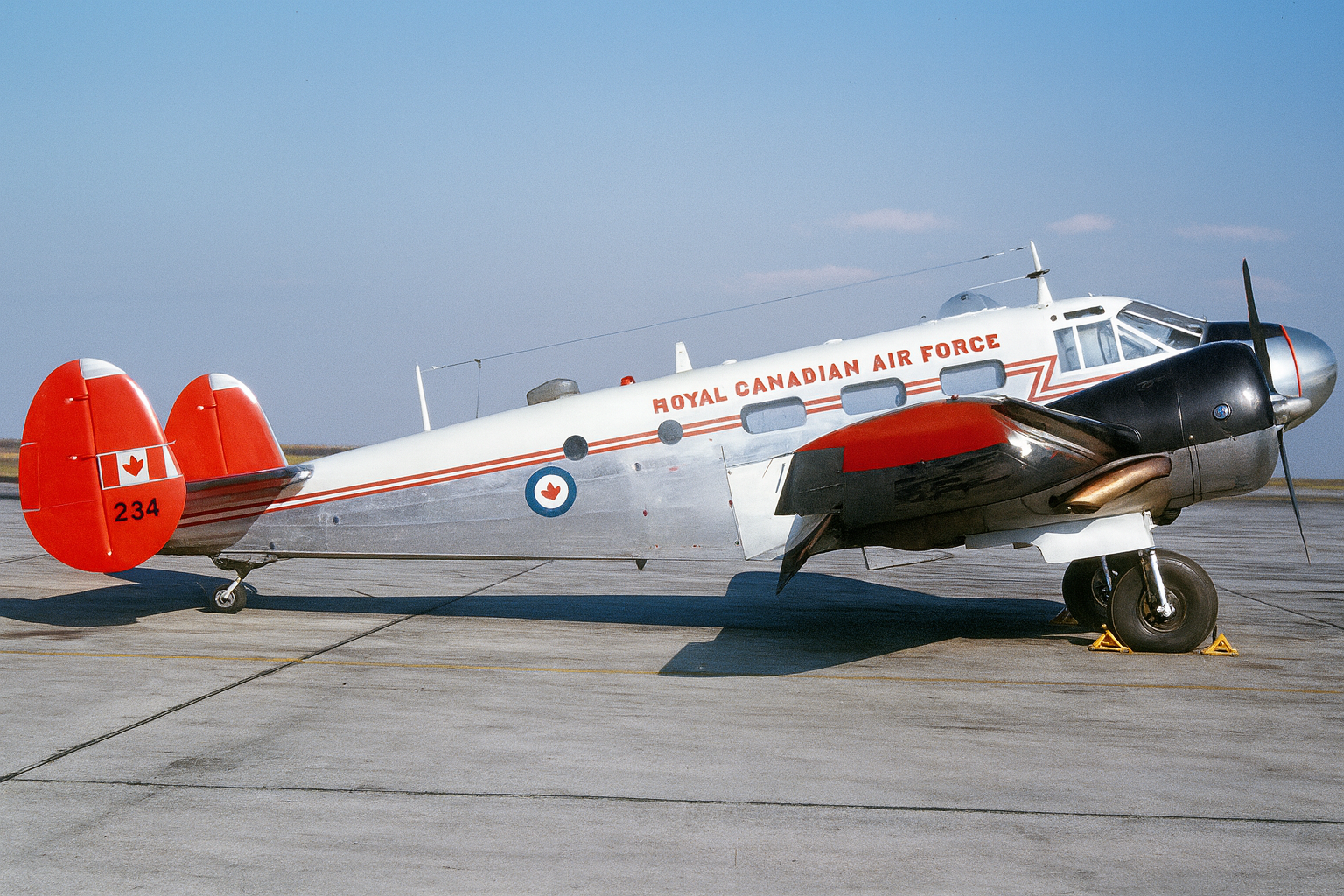
The C-45 is a military version of the light commercial transport made by Beech Aircraft of Wichita, Kansas that first flew on January 15, 1937. A 6 to 11-seat, twin-engine, low-wing, tailwheel aircraft, the Beech 18 was continuously produced from 1937 to November 1969 (over 32 years, the world record at the time, with over 9,000 produced) making it one of the world's most widely-used light aircraft. Sold worldwide, in 32 configurations, as a civilian executive, utility, airline and cargo aircraft, on tail wheels, nose wheels, skis and floats, the C-45 version was widely used as a military aircraft in a variety of roles. 5,204 military models were delivered during World War II to 30 of the world’s air forces, with 394 being acquired by the Royal Canadian Air Force (RCAF) in 1939/40, and another 388 in the 1950s. The Model D18S was the first post-World War II variant introduced in 1945, with seating for up to eight passengers and maximum takeoff weight of 8,750 lb (3,970 kg). A total of 1,035 of this model were built.
Used initially for light transport and communications duties, after World War II the Expeditor became the RCAF's basic multi-engine trainer for pilots, navigators and radio officers, while still providing communications and VIP transport duties at most RCAF Stations. Later in its career, circa 1956, the aircraft equipped RCAF Auxiliary (active Reserve) squadrons across the country in transport and search and rescue roles. Three versions of the C-45 were used by the RCAF - the 3NM, used for navigation, bombing and weapons training, and photo survey work; 3TM for VIP transportation; and 3T for cargo. During the 1950s, the numbers in service shrunk to 180 and, by 1970, all had been retired - the aircraft having served the RCAF for three decades, from 1941 to 1972. Beech, however, refurbished more than 2,200 of the military versions for civilian use, zero-timing the airframes.


During its life, the Expeditor had many nicknames: the Bug Smasher, the Exploder, the Wichita Wiggler, and the Kansas Kangaroo. The first because the aircraft flew at low altitudes and its windscreen collected bugs, the remainder were due to its unique ‘walking’ landing gear. Because the main gear strut was not directly attached to the fuselage, only held by two side scissors, each gear could move independently, or walk. Also, if the aircraft touched down on both wheels in a nose down attitude, both gear would move aft and cause the aircraft to be catapulted back into the air – a quite frightening event – often witnessed at the multi-engine pilot training school!
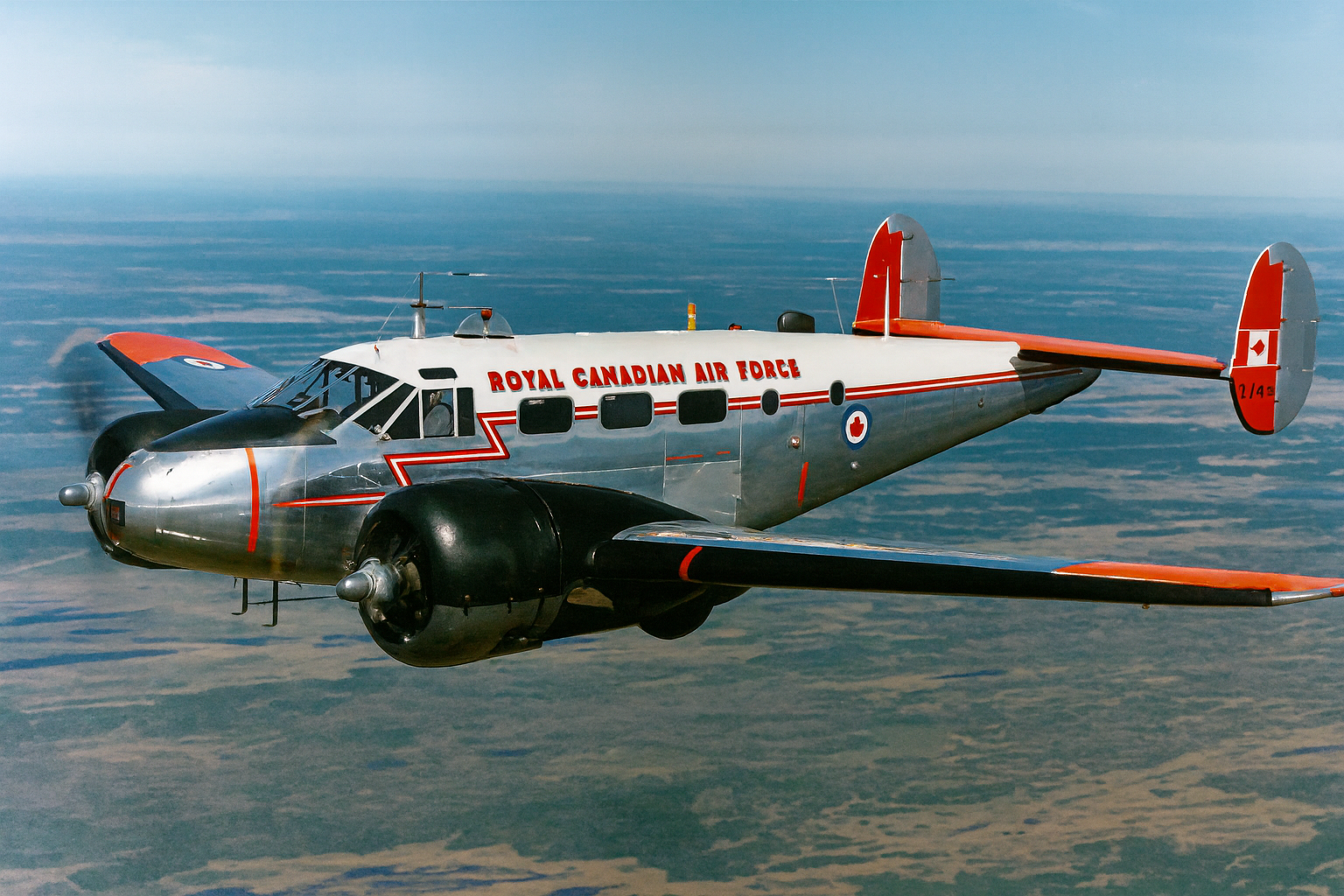
The Model D18S was the first post-World War II variant, introduced in 1945, with seating for up to eight passengers and Maximum Takeoff Weight of 8,750 lb (3,970 kg). A total of 1,035 of this model were built.
Model D18S-3N – Version of D18S delivered to the Royal Canadian Air Force (RCAF); 100 built
Model D18S-3NM – Version of D18S delivered to the RCAF; 133 built
Model D18S-3TM – Version of D18S delivered to the RCAF; 48 built
Like most RCAF flying stations, Greenwood, from the acquisition of the C-45 in 1939/40 until 1968, had Expeditors on strength, first with #6 (RCAF) Operational Training Unit in 1946 and with 103 Rescue Unit from 1947–68; Expeditors 1513 and 1517 also served with 405 Squadron.
The aircraft’s normal employment was multi-engine flying experience for low-time pilots, annual pilot instrument check rides, and communications flying (taking people to and from Greenwood on business and picking up and delivering parts and other necessities that took too long using normal methods.)
RCAF Operating Specifications
Crew: 1 – 2 pilots and 6 passengers / 2 Navigator students and one staff Navigator
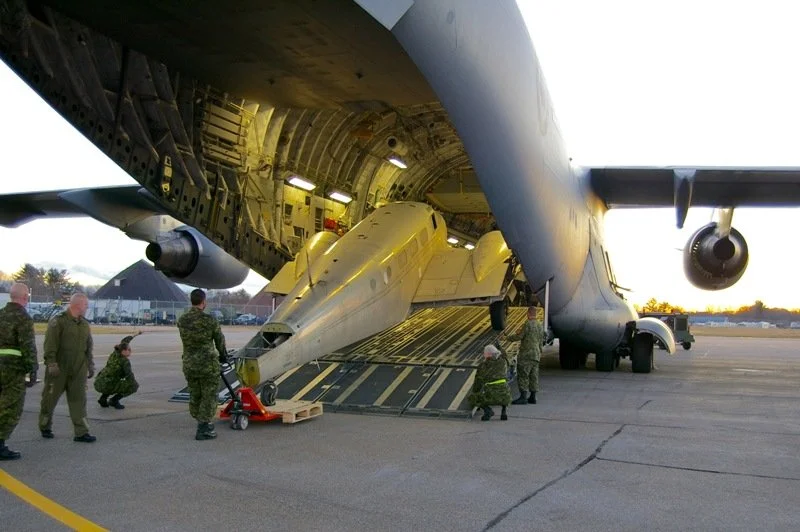
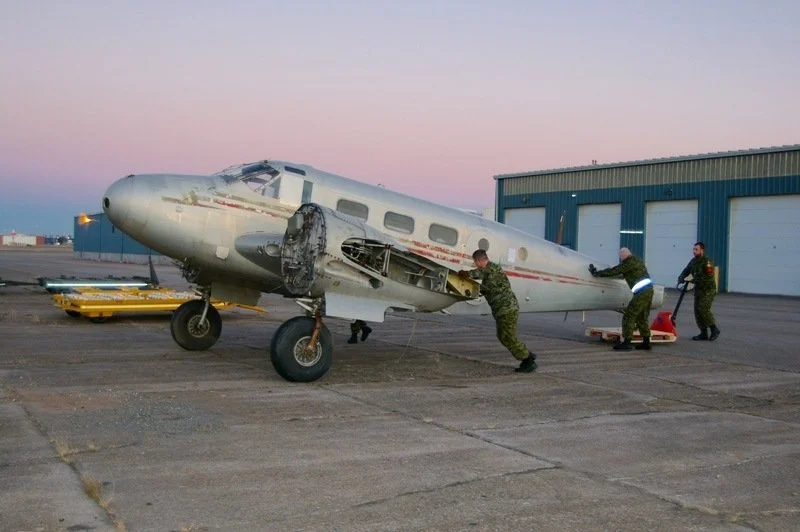
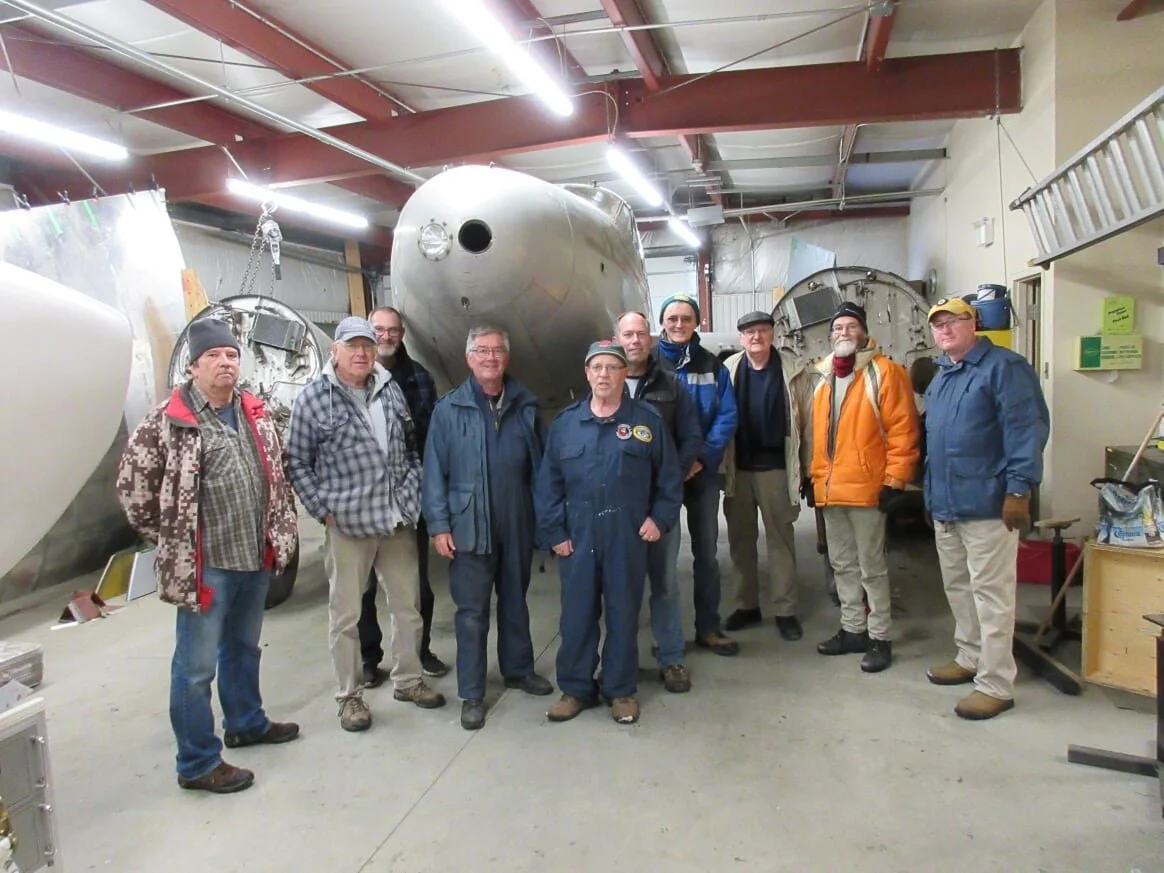
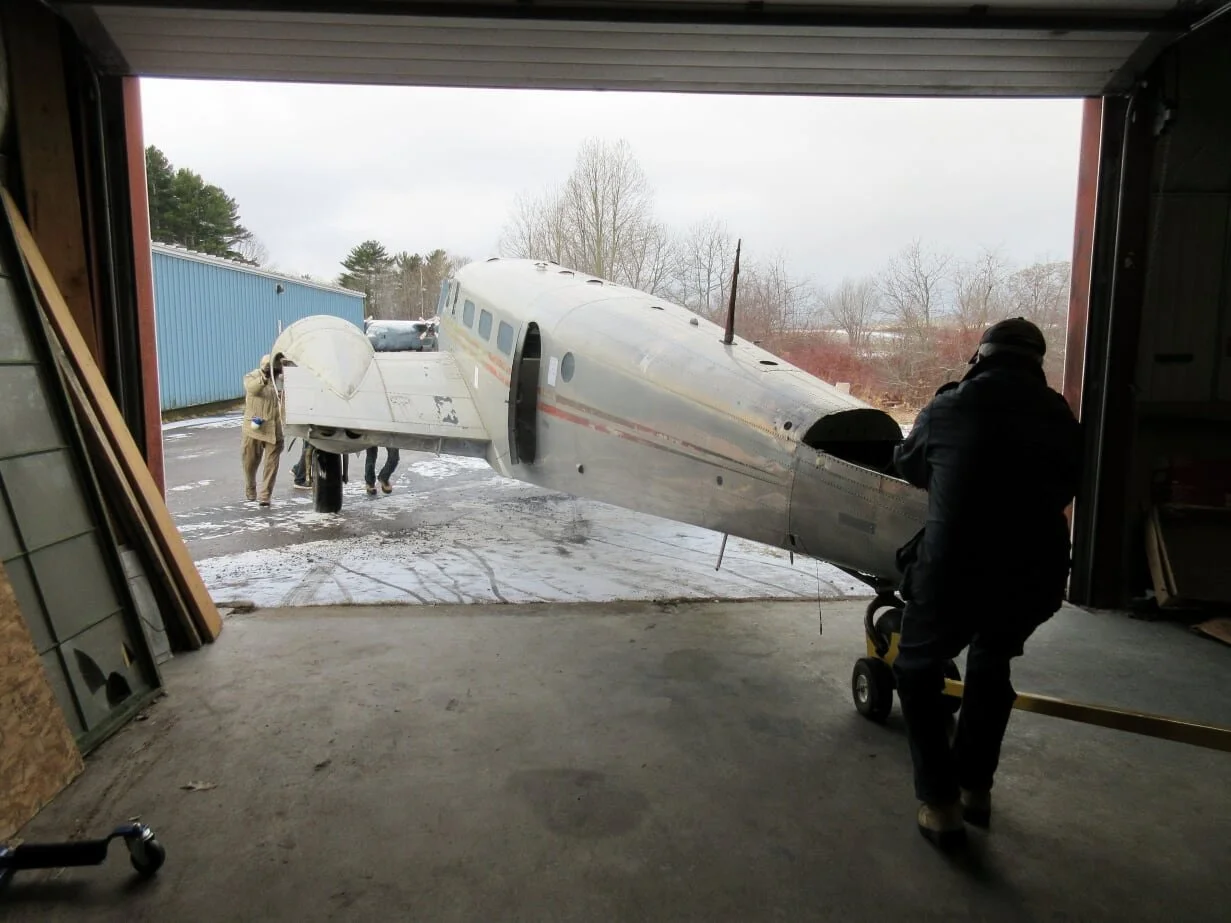
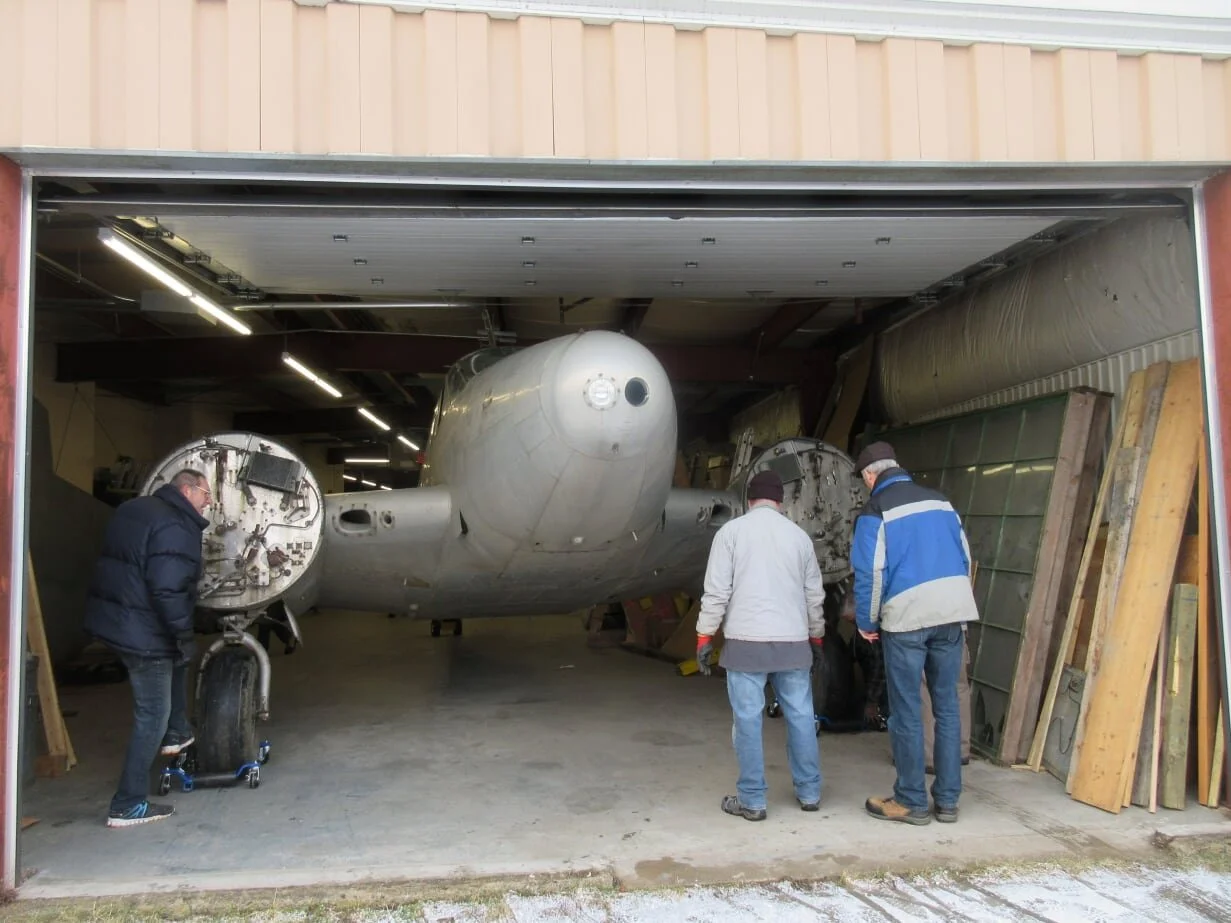
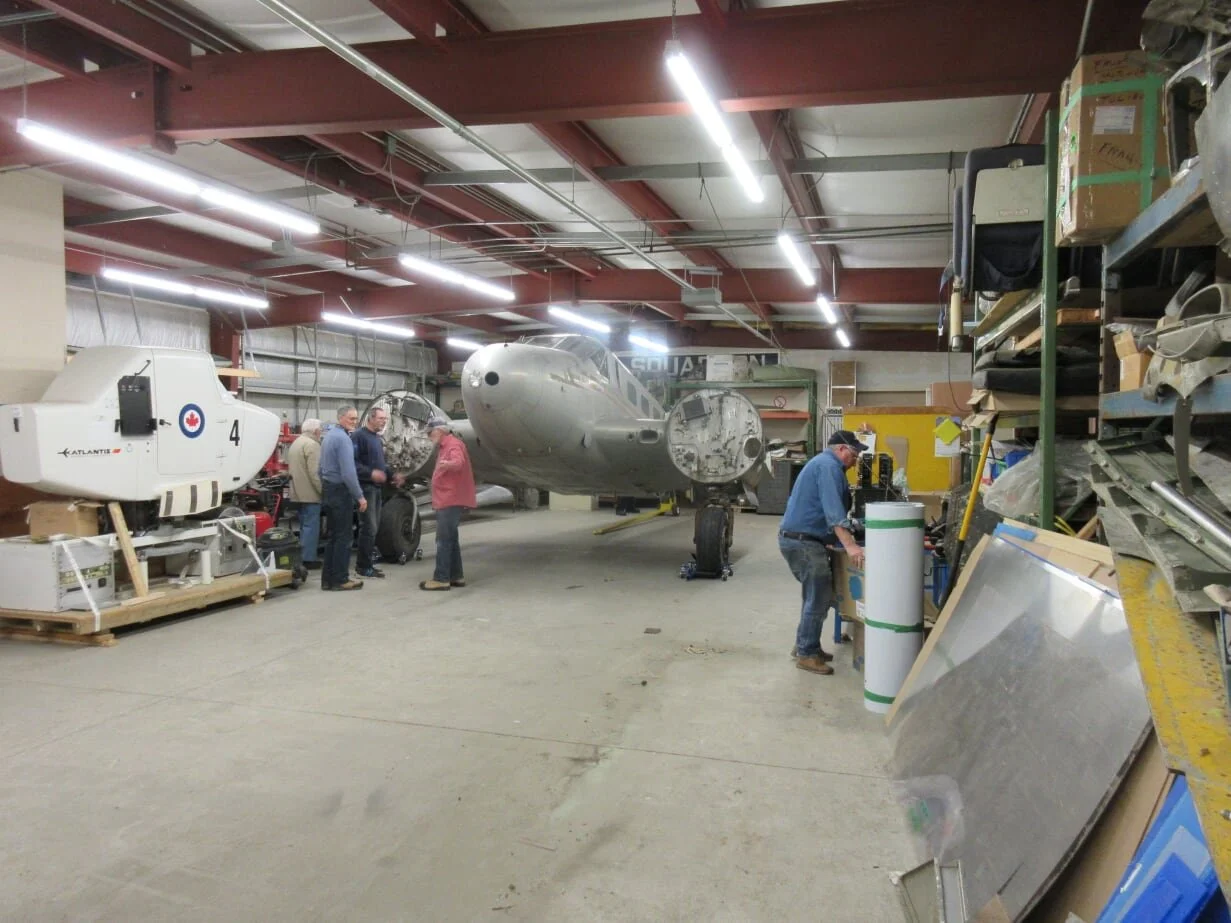
The Move Team Jan 2019
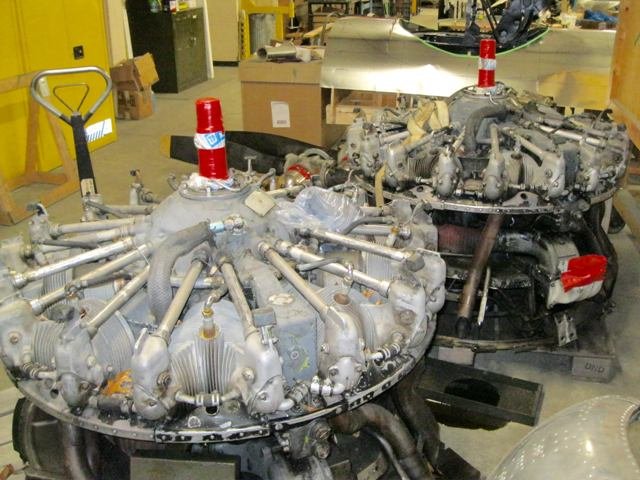
A Christmas present from the National Air Force Museum of Canada! A pair of Pratt and Whitney R-985 , nine cylinder radial engines for our Expeditor Restoration Project.
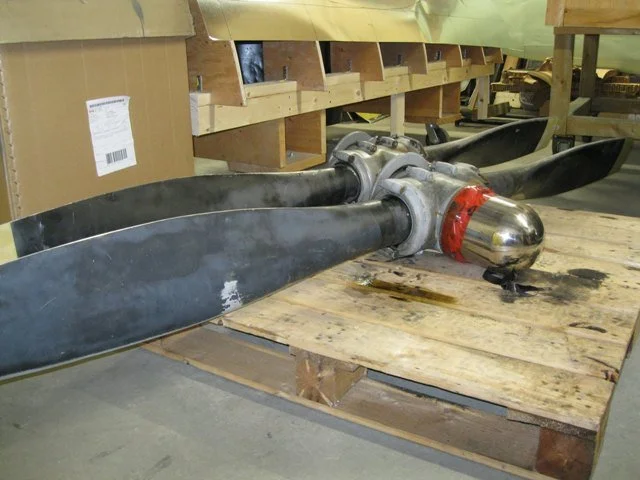
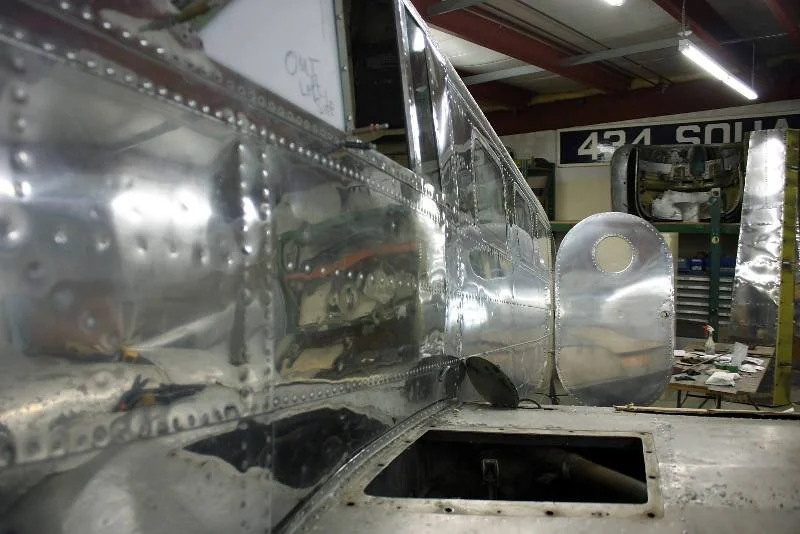
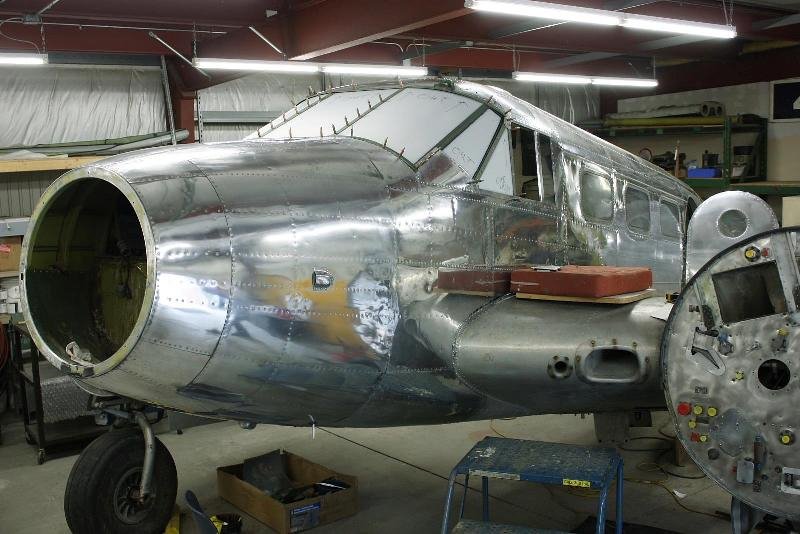
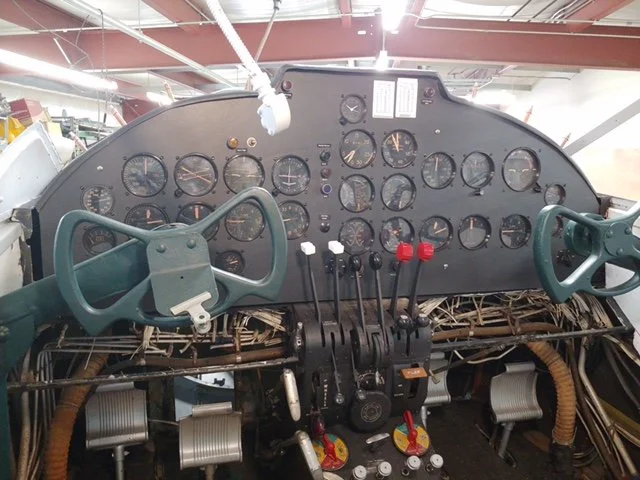
2022 - Cockpit Instrument Panels Complete
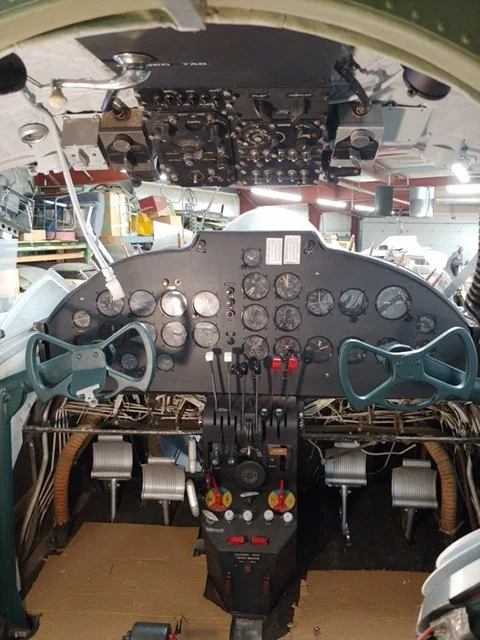
2022 - Cockpit Instrument Panels Complete
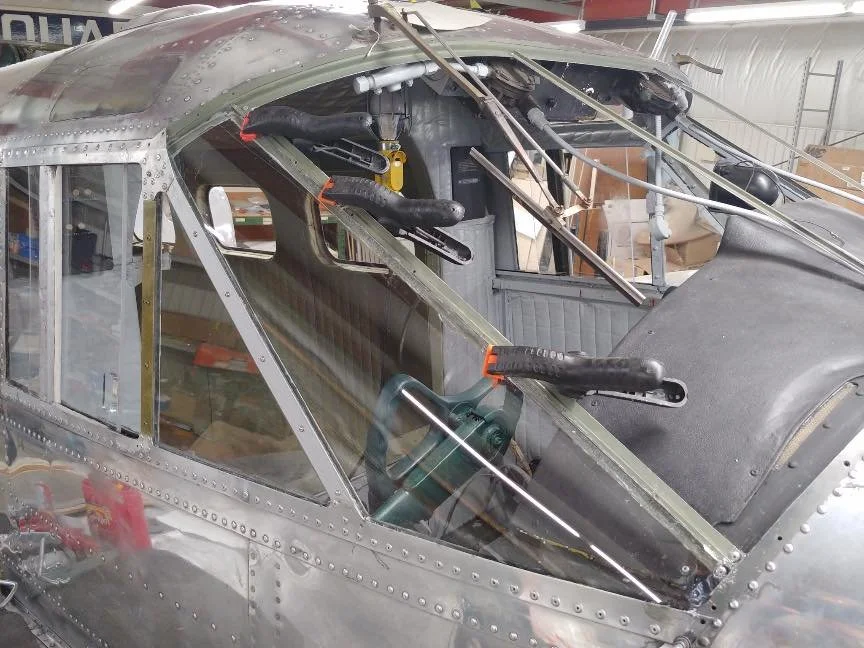
We managed to find a company that manufactures all the windshield/side window/cabin windows panels. Grasshopper is taking it slow and taking his time to install them right!
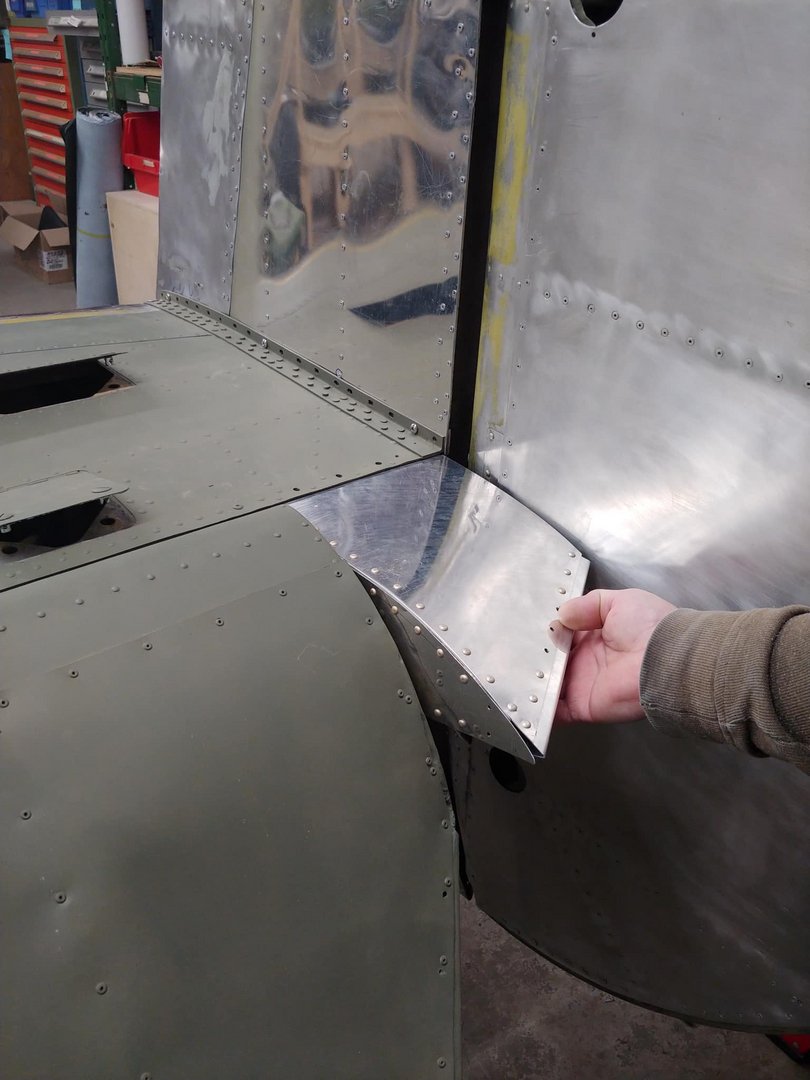
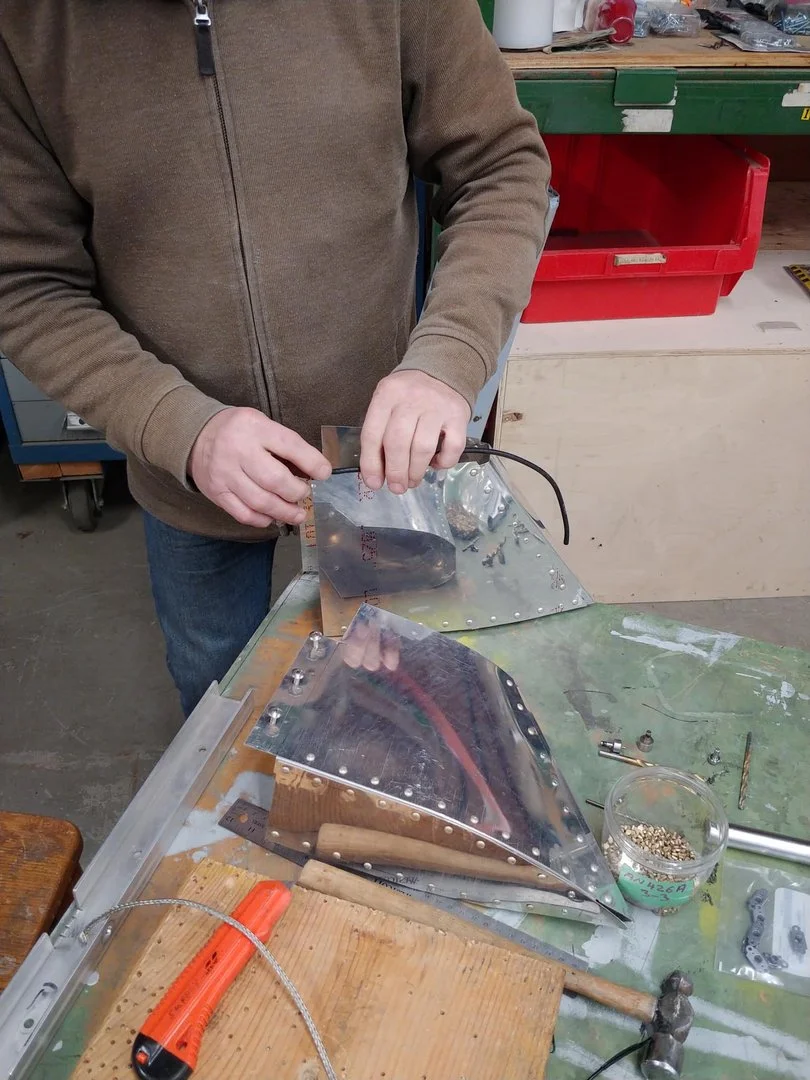
We didn't receive this fairing with the aircraft so Martin had to manufacture a left and right. Nice work, Martin!
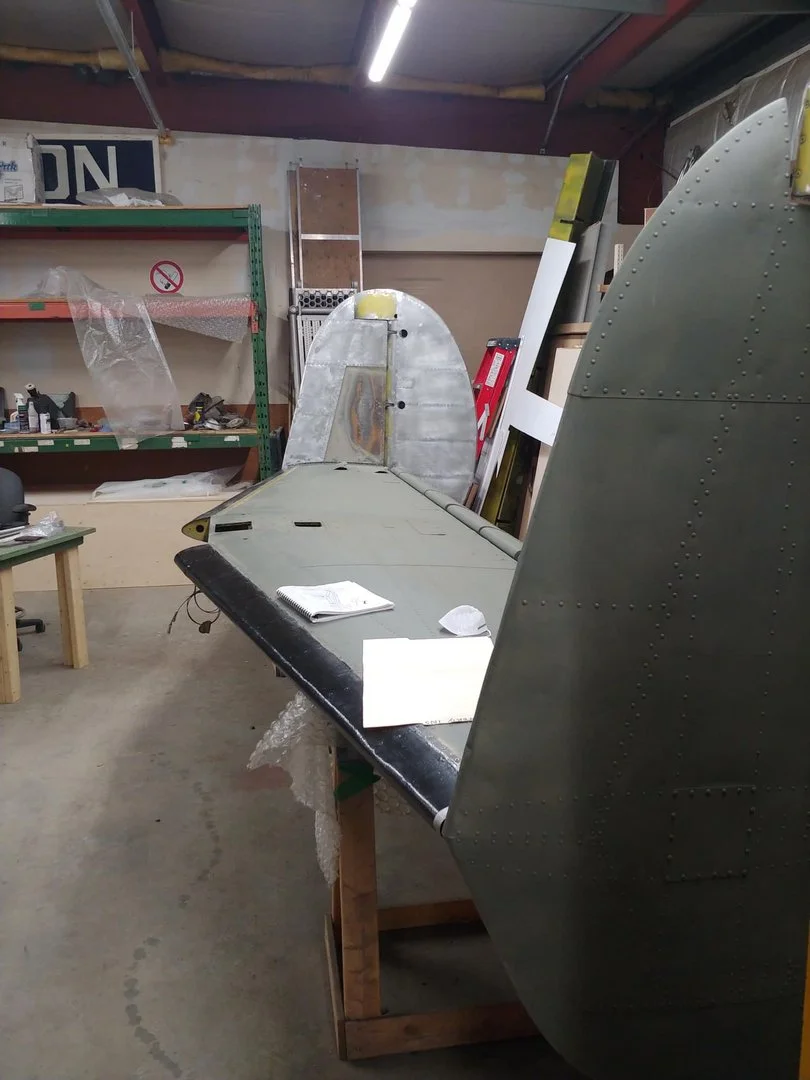
Darren and Martin are fitting the vertical stabilizers and rudders to make sure all the pieces line up. Note the shiny aluminum piece on the starboard stab. Darren had to remove the damaged piece, manufacture and fit a new panel in place.
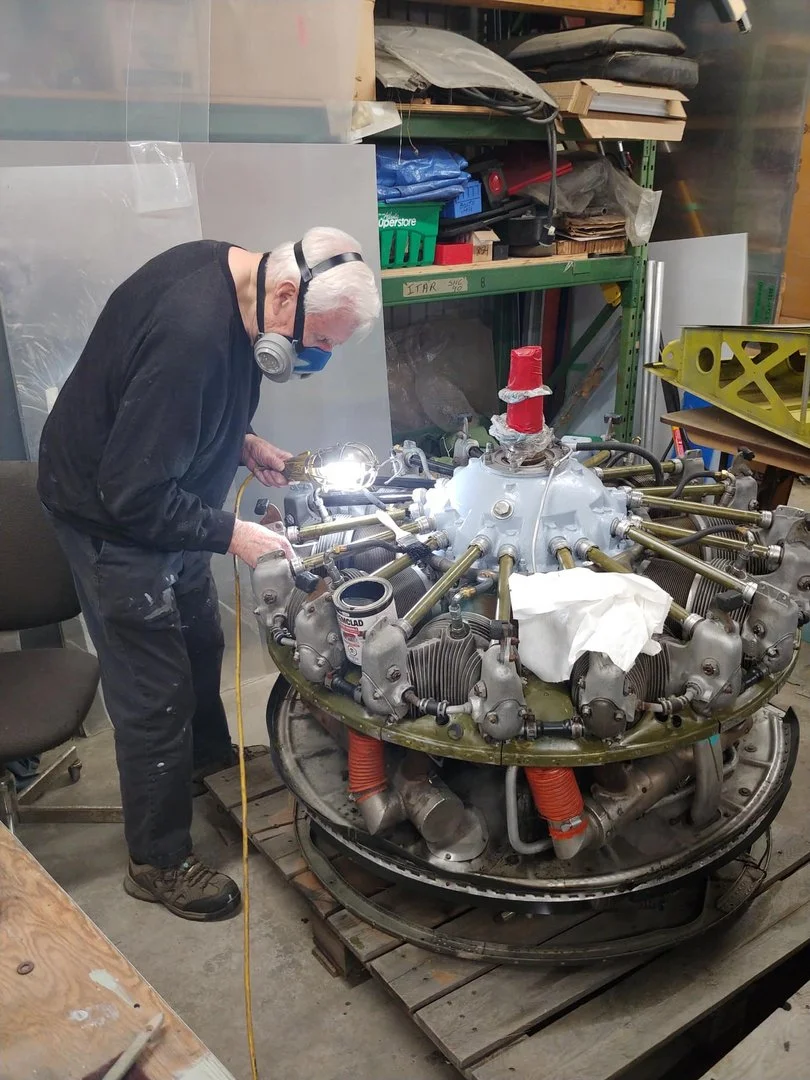
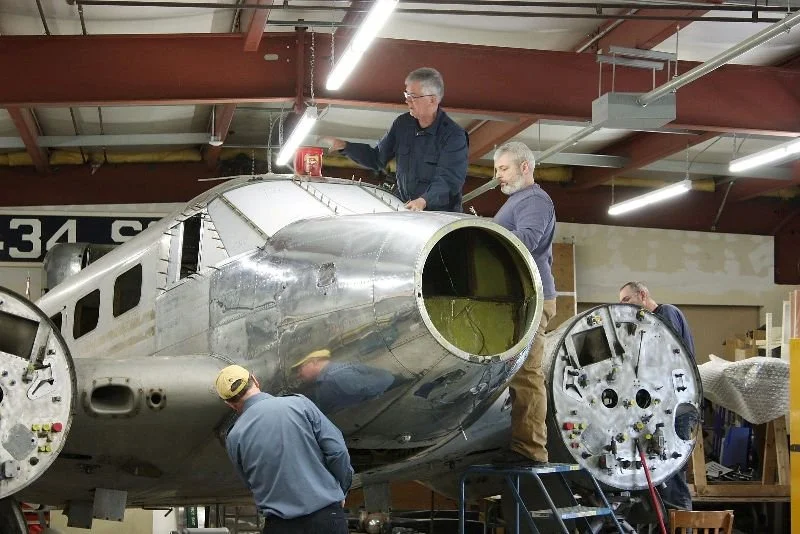
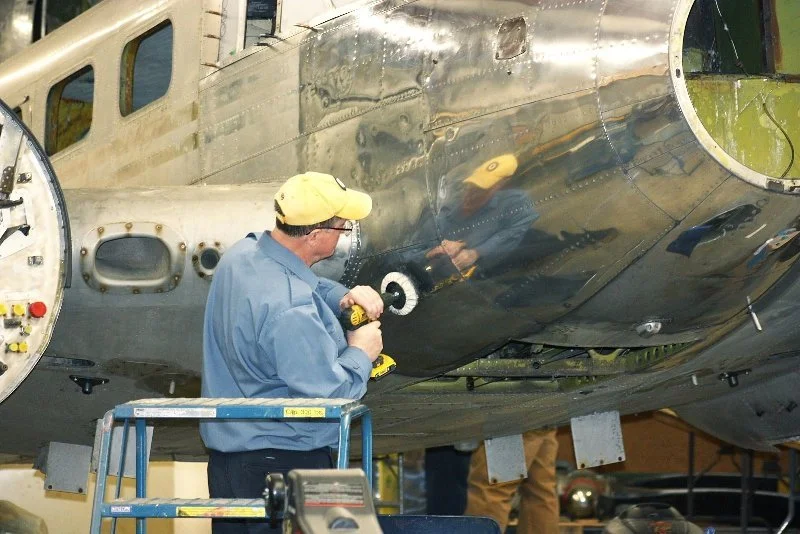
Painstaking work. great job Bill!
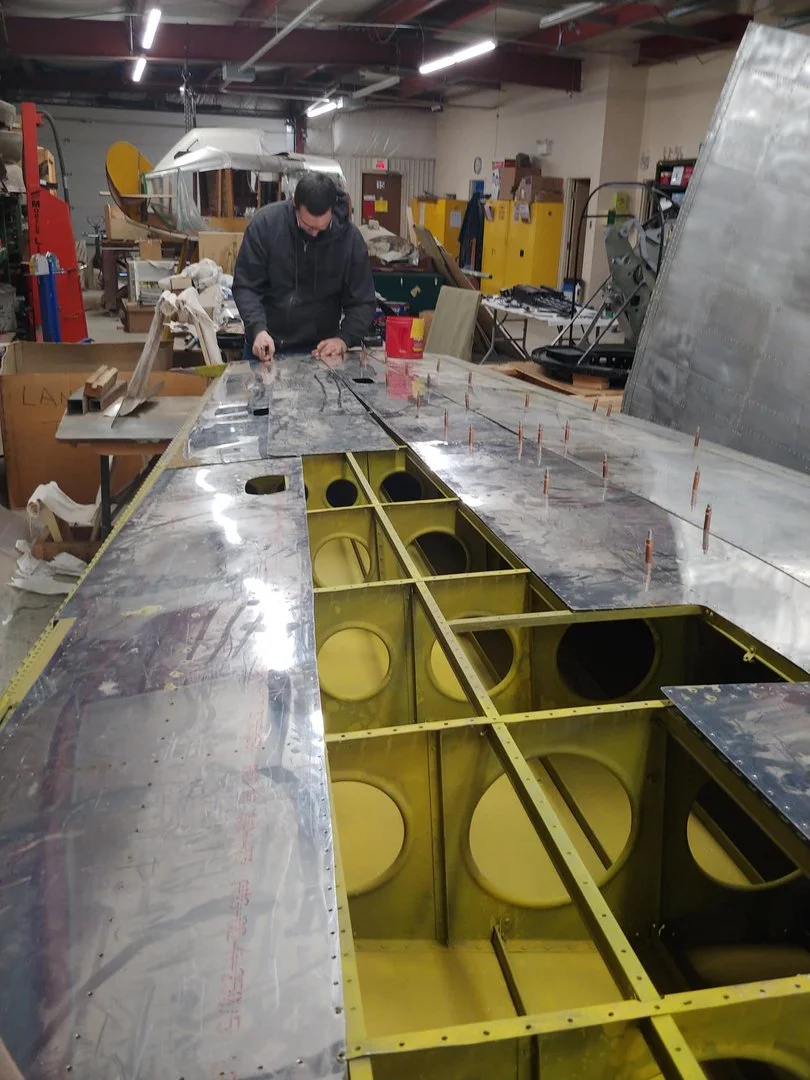
Nick has primed the undersides of the wing skin strips and is now getting them into position for riveting!
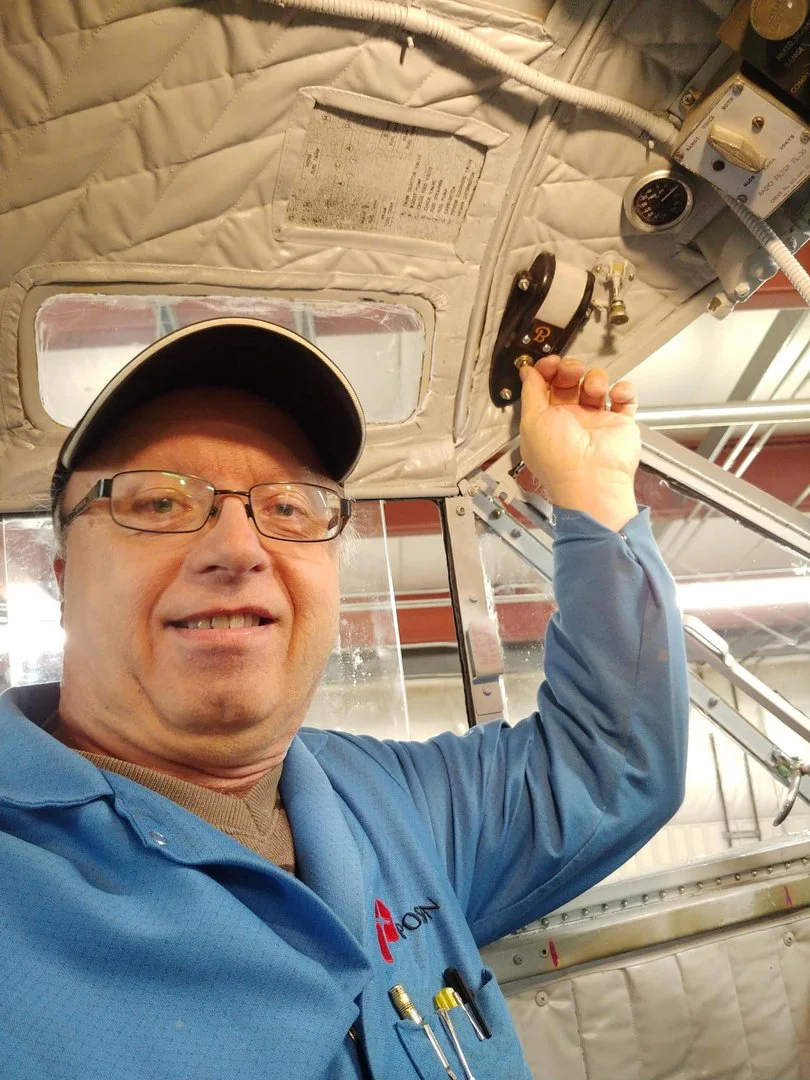
Andre was seconded from the Lancaster Turret project to lend his expertise!
Aircraft Specifications
Length: 34 feet (ft) 2 inches (in) (10.41 metres (m))
Wingspan: 47 ft 7 in (14.5 m)
Height: 9 ft 8 in (2.95 m)
Wing area: 349 square feet (ft²) 32.4 square meters (m²)
Empty weight: 6,175 lb (pounds) 2,800 kg (kilograms)
Loaded weight: 7,500 lb (3,400 kg)
Max takeoff weight: 8,727 lb (3,959 kg)
Powerplant: 2x Pratt & Whitney R-985-AN-1 "Wasp Junior" radial engines, 450 hp (336 kilo Watts) each
Maximum speed: 225 miles per hour (mph) (195 knots) (kts), 360 kilometers per/hour (km/hr)
Range: 1,200 miles (1,000 NM) (nautical miles) 1,900 km at 160 mph (140 kts) (260 km/h)
Service ceiling: 26,000 ft (7,930 m)
Rate of climb: 1,850 ft/min (9.4 m/s)
Top speed: 230 mph (200 kts) (370 kph); Cruise speed: 160 mph (140 kts) (258 kph); Stall: 77 mph (67 kts) (124 kph); Initial climb rate: 1,190 fpm (6 m/s)
Range: 1134 miles (985 nm) (1824 kms); Ceiling: 20,500 ft (6,248 m)