

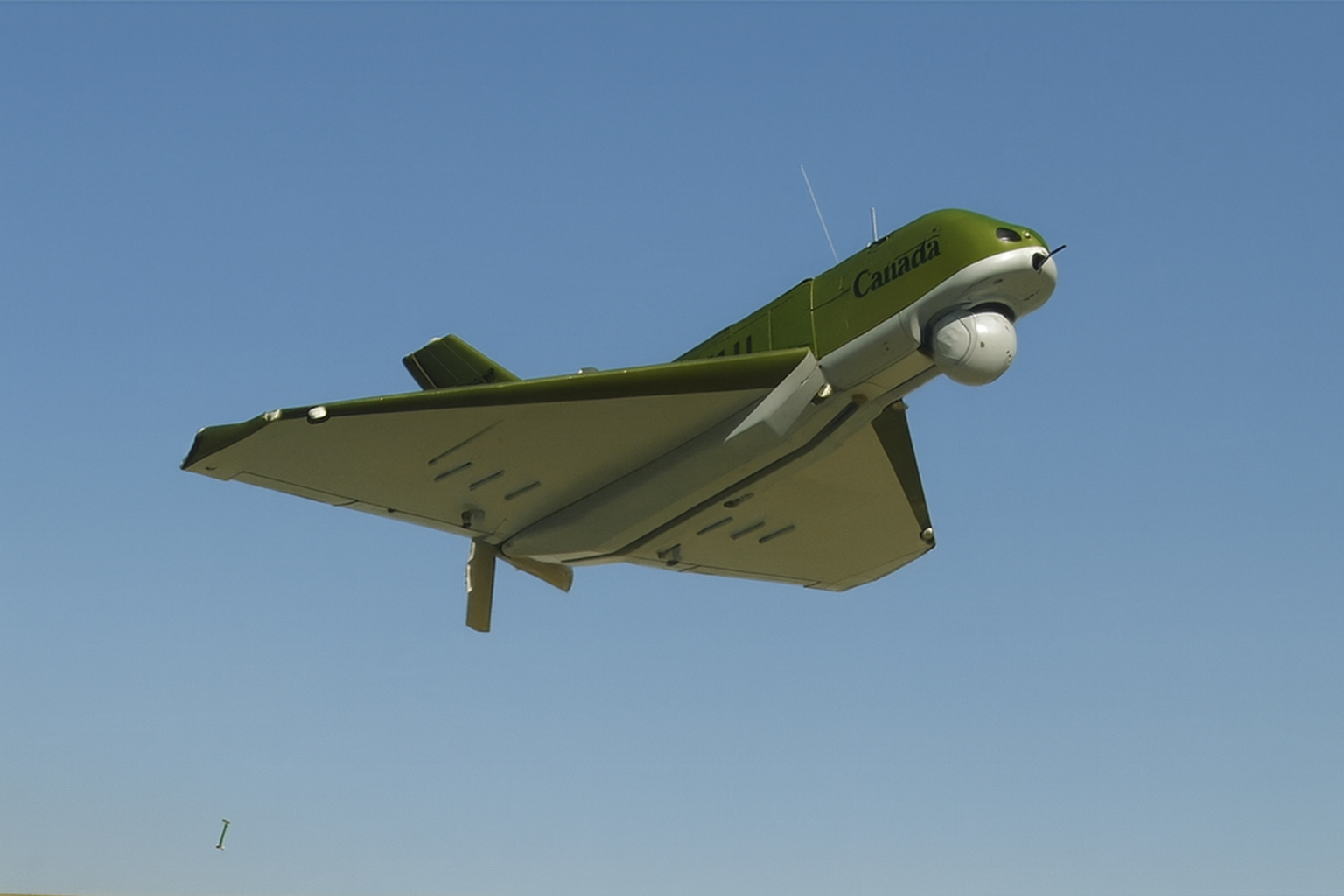
SAGEM Sperwer
CU 161
The Sperwer is an uninhabited aerial vehicle (UAV) manufactured by the French firm SAGEM. Designed to support intelligence, surveillance, target acquisition and reconnaissance, the Sperwer facilitates military missions by reducing the hazards to troops from ambush and improvised explosive devices. The Canadian Forces procured 31 for service in Afghanistan, with the first ones arriving in Kabul 29 Oct 2003. The first flight took place 06 Nov 2003, and the last flight from Kandahar 18 Apr 2009. Sperwer was the first UAV operated by the Canadian Forces and paved the way for the use of future UAV systems, including the CU 170 Heron employed in Afghanistan.
The Sperwer system comprised aerial vehicles, a ground control station, a transportable hydraulic catapult and a ground data terminal housed in the communications shelter carried on high-mobility vehicles. The entire system could be transported in two CC 130 Hercules aircraft and operated from unprepared sites using catapult launch and parachute and airbag recovery.
Equipped with three cameras, the Sperwer was a day/night UAV. A stationary video camera in the nose gave the operator a forward-looking, wide-angle view of the flight path. Two cameras in the chin turret could be aimed, via a remote joystick in the ground control unit, or locked onto a target while the vehicle manoeuvred. The cameras in the turret provided real-time, high-resolution, day-time and infra-red night-time imagery. A target's position could be located by GPS to an accuracy of 20 meters.
The Sperwer's V-tail and swept wings are made of a composite honeycomb material that made it almost invisible to radar. The nose and tail cone are made of lightweight carbon fibre. Only the centre fuselage is made from aluminum.
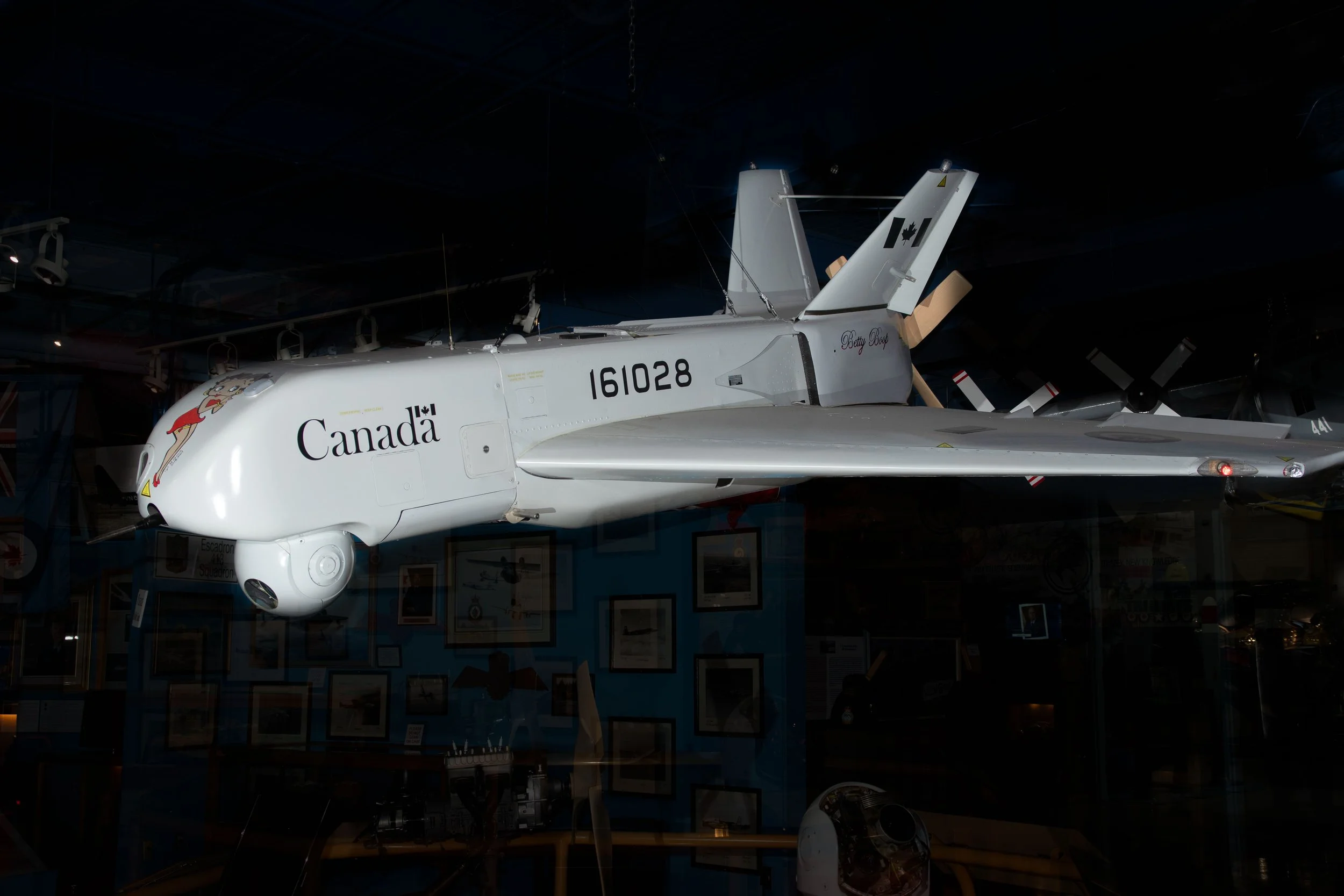
History
In 2006, the Tactical Uninhabited Air Vehicle (TUAV) Flight was formed from members of 408 (Tactical Helicopter) Squadron, CFB Edmonton and the 5e Régiment d'artillerie légère du Canada from CFB Valcartier. 14 Wing Greenwood personnel were deployed to TUAV Flight to support the operation and maintenance of the Sperwers in Afghanistan.
The Canadian crews named the Museum's Sperwer "Betty Boop" after a 1930s cartoon character. During the final rotation of Sperwers in Afghanistan, "Betty Boop" sustained significant damage 24 Oct 2008 while landing at Kandahar Airfield. The recovery parachute was not fully inflated when the aircraft struck the ground, and one wing was destroyed, the other damaged. The damaged aircraft, with a spare wing and other required parts, were obtained by the Museum and restored for display.
The Sperwer did not have conventional landing gear. For take-off, it was perched in a rail-mounted cradle and launched into the air by a pneumatic ram installed on a 10 tonne Heavy Logistics Vehicle Wheeled truck. To land, the Sperwer was flown above a landing zone; the engine was stopped; a 117-square metre parachute was deployed from a hatch in the upper fuselage; and three air-bag cushions were inflated: one under each wing, and one under the nose. A truck with a crane retrieved the landed vehicle and, if not severely damaged, the UAV was prepared for another flight.
Did you know!?
14 Wing is one of only four places to have a Sperwer on display in Canada!
Especially, as ours has an unusual delta wing, rear-engine, pusher configuration
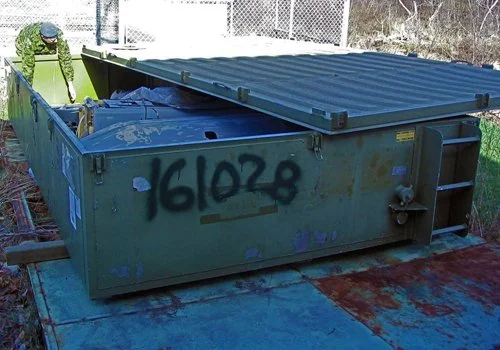
Unboxing the Sperwer
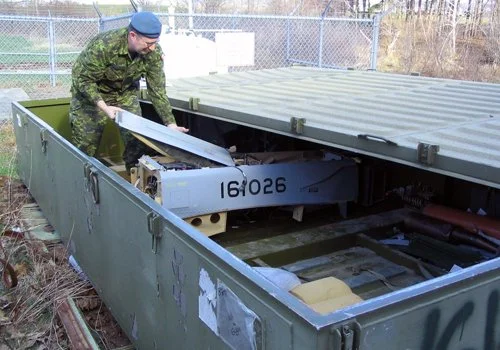
Unboxing the Sperwer
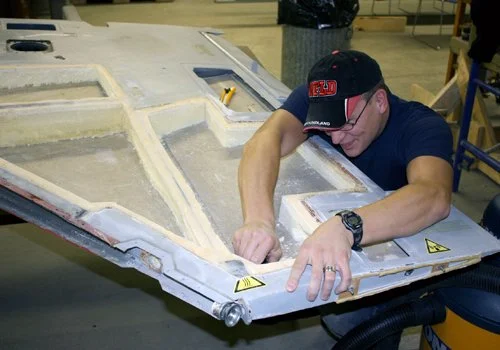
Restoration and Assembly of the Sperwer
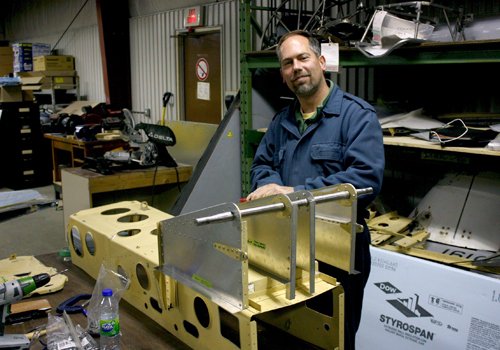
Restoration and Assembly of the Sperwer
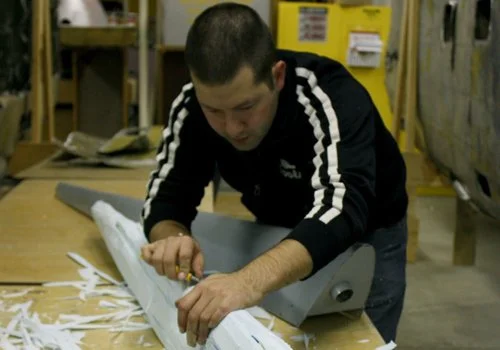
Restoration and Assembly of the Sperwer
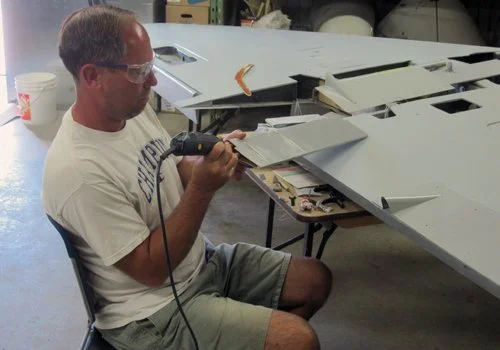
Restoration and Assembly of the Sperwer
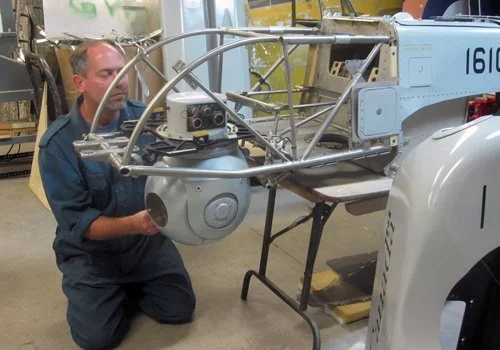
Restoration and Assembly of the Sperwer
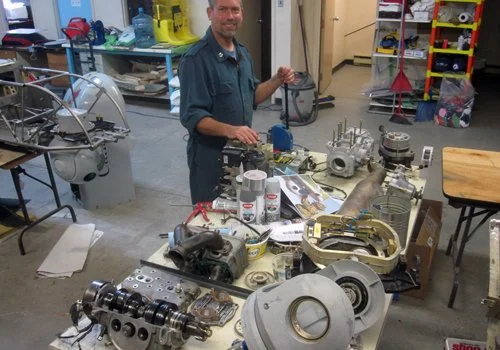
Restoration and Assembly of the Sperwer
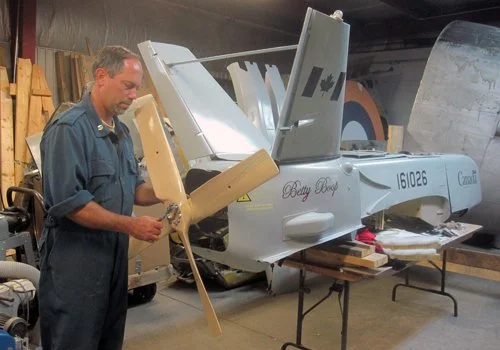
Restoration and Assembly of the Sperwer
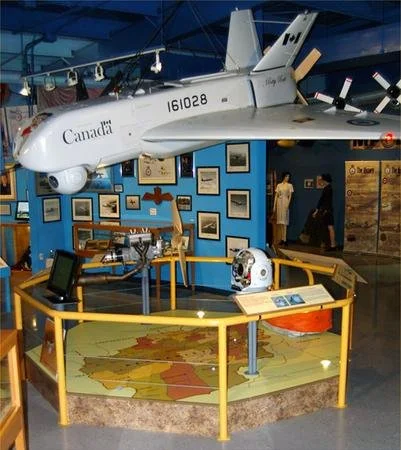
Sperwer Display at Greenwood Military Aviation Museum
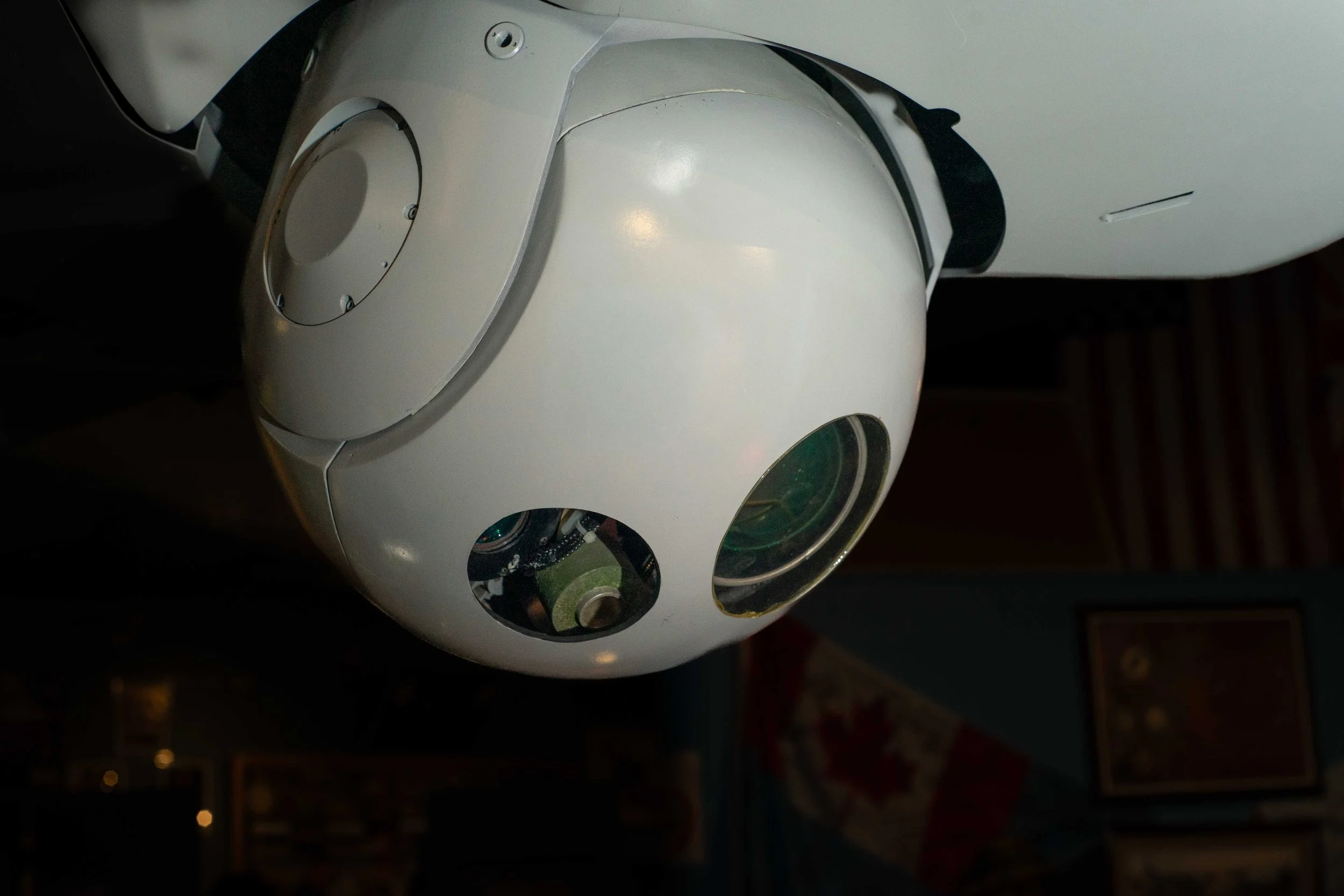
Photo by Glenn Dube
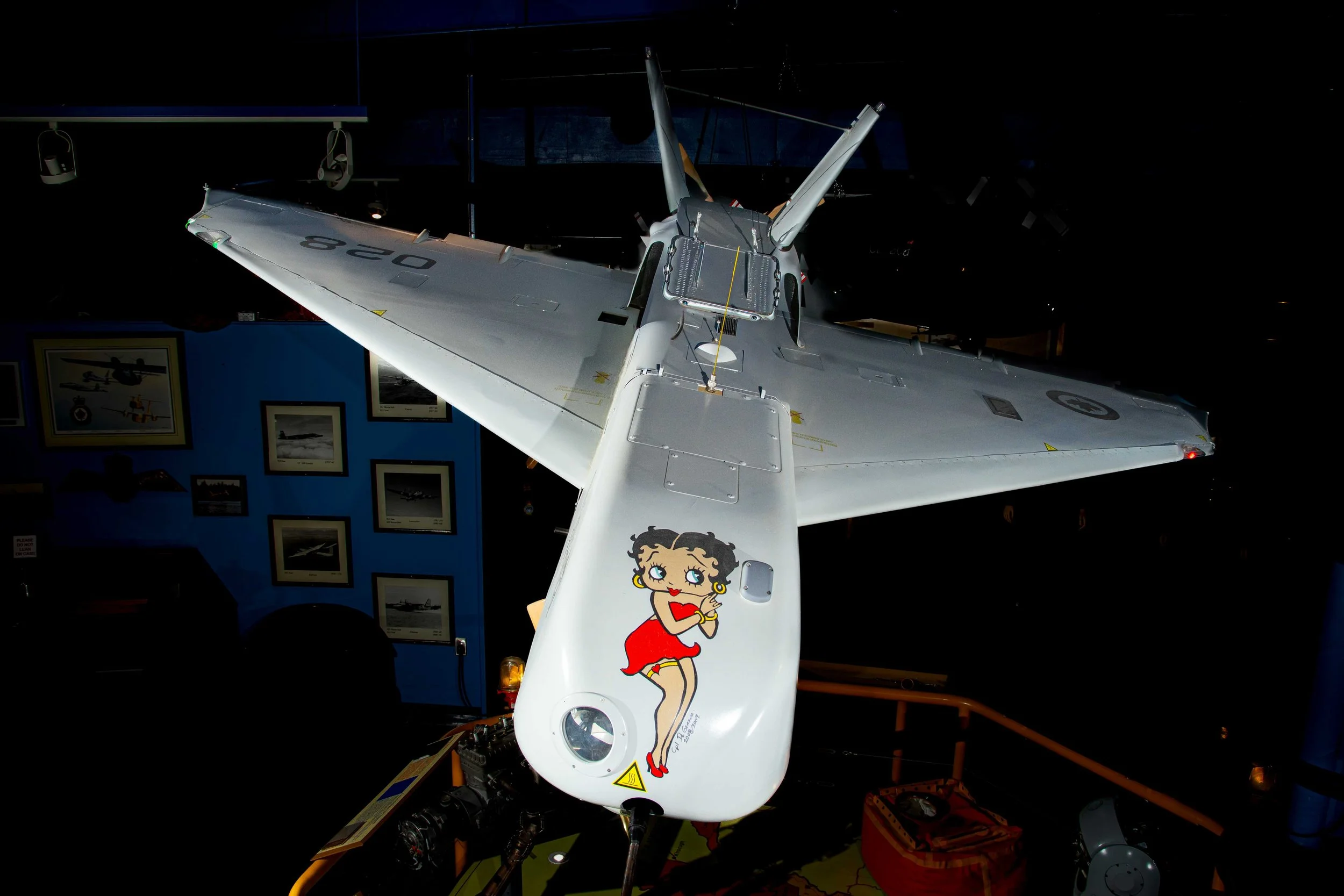
Photo by Glenn Dube
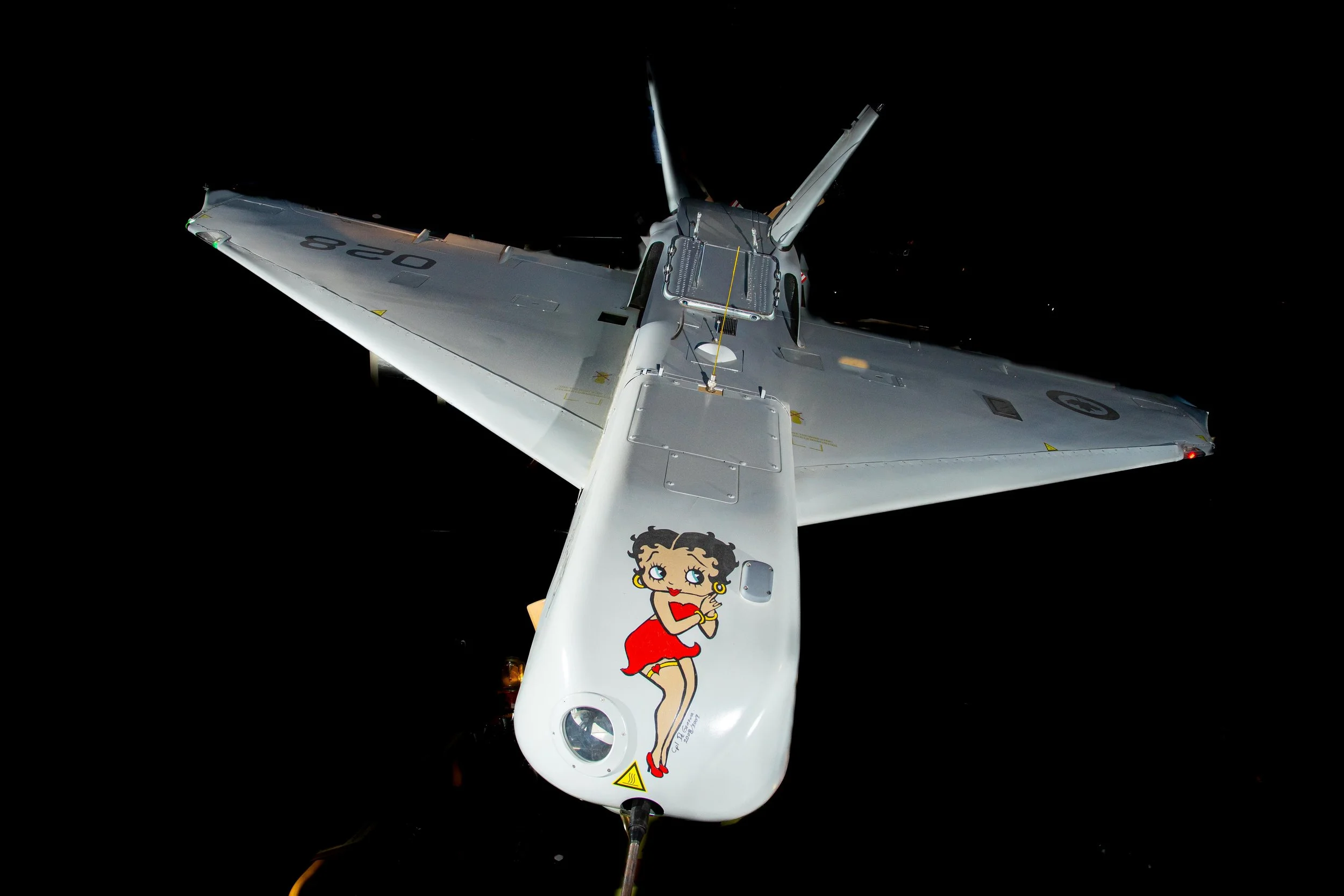
Photo by Glenn Dube
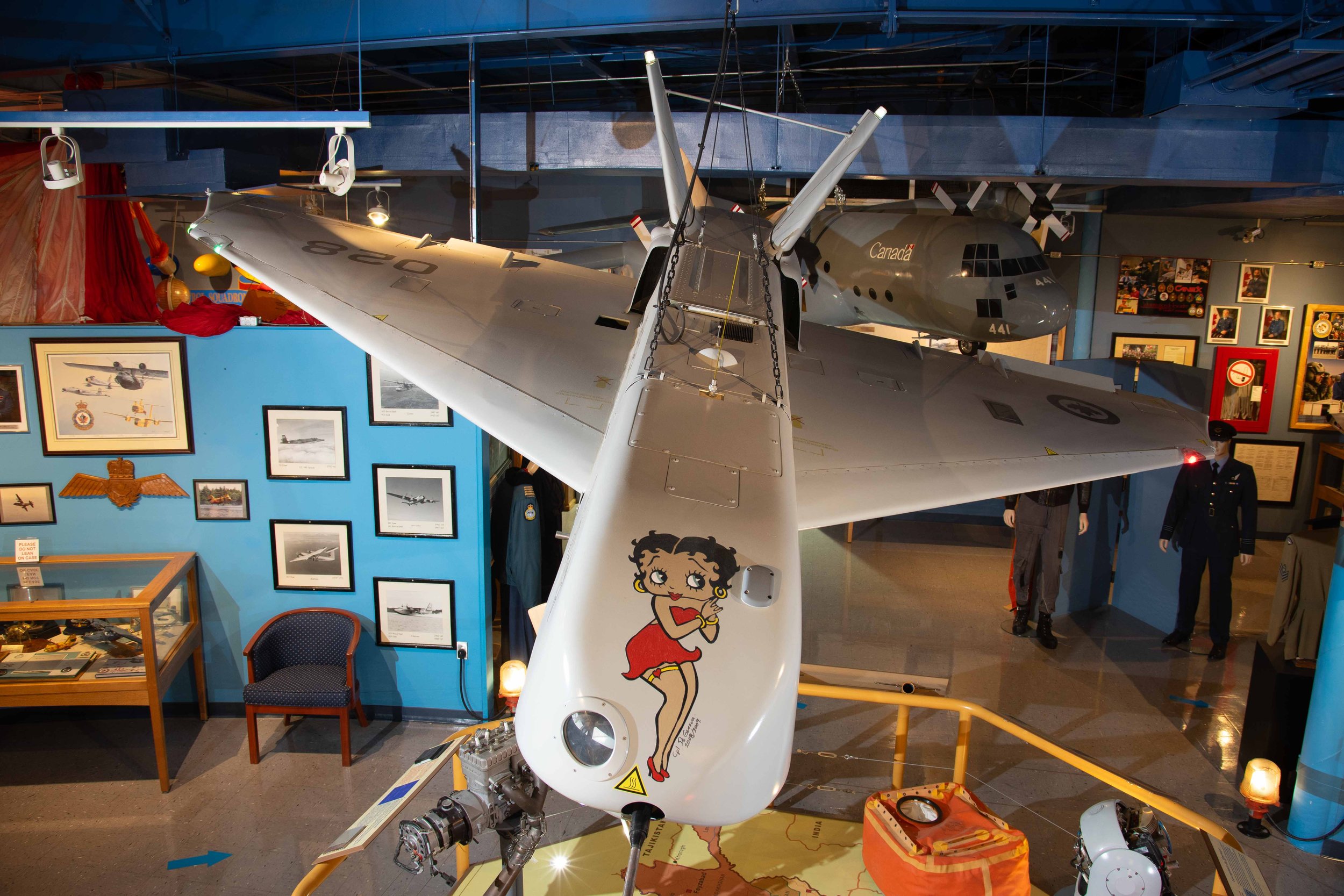
Photo by Glenn Dube
Photo by Glenn Dube
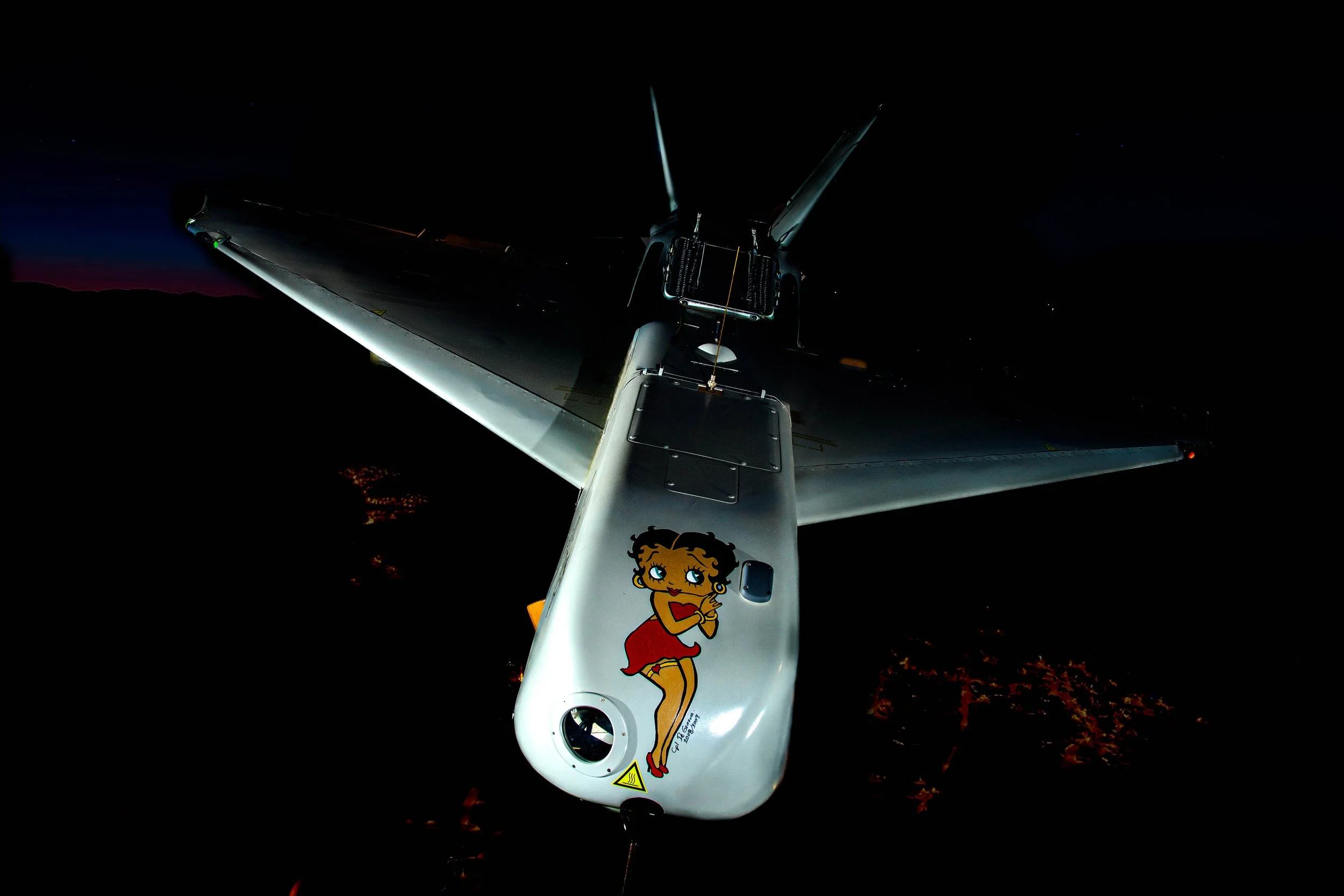
Photo by Glenn Dube
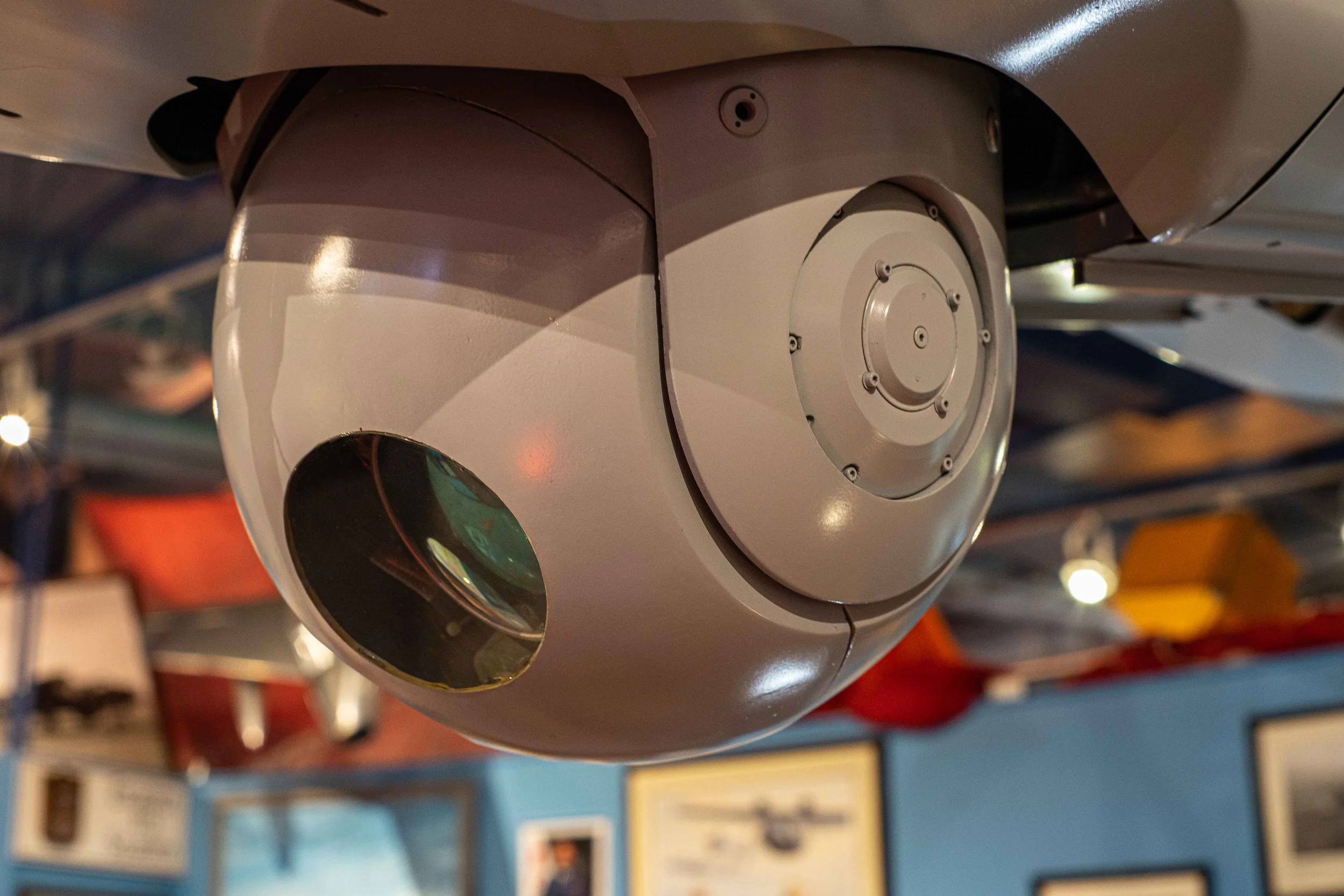
Photo by Glenn Dube
Aircraft Specifications
Roles: Intelligence, Surveillance, Target Acquisition and Reconnaissance
Number built for Canada: 31 Sperwers
Manufacturer: SAGEM, France Crew: 0
Powerplant: Bombardier-Rotax 562 engine
Maximum speed: 112 miles per hour (180 kilometres per hour)
Cruising speed: 104 miles per hour (167 kilometres per hour)
Service ceiling: 13,100 feet (4,000 metres)
Flight Radius: 50 miles (80 Kilometres)
Endurance: 5 hours
Gross weight: 727 lb (330 kilograms)
Wingspan: 13 feet 9 inches (4.2 metres)
Length: 11 feet 7 inches (3.52 metres)
Sensors: Two electro-optical cameras, one infra-red camera