
Lockheed Aurora/Arcturus
(CP-140 / CP-140A)
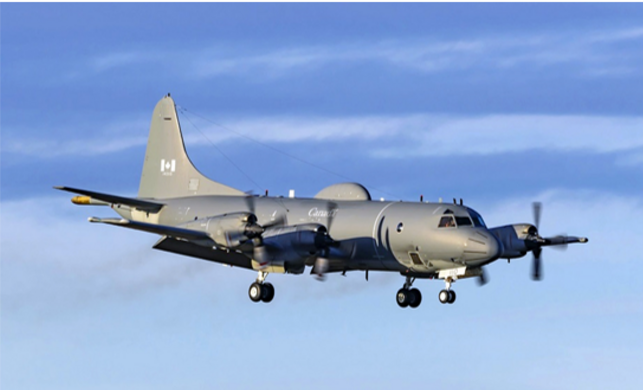
"Aurora" refers to the Roman goddess of the dawn and was chosen in competition to reflect the dawning of the new era of computer-driven, modern technology replacing the aging, mainly analogue, Argus in 1980/81. A four-engine, long-range patrol aircraft built primarily for the maritime patrol/anti-submarine warfare (ASW) role, the Aurora, with its long endurance, long range and critical updates has become a multi-purpose aircraft. As a command, control, communications, computers, intelligence, surveillance, and reconnaissance (C4ISR) platform, this aircraft now performs domestic and international operations across a wide spectrum of disciplines including domestic surveillance of the Canadian Atlantic, Pacific and Arctic Oceans, anti-surface warfare, maritime and overland intelligence, surveillance and reconnaissance (ISR), strike coordination, and search and rescue (SAR) missions.
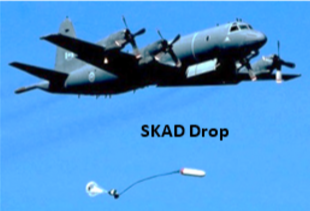
Support to other government agencies include preventing illegal immigration, fishing, polluting, and drug trafficking, as well as assisting with disaster relief. The Aurora has also retained and modernized its ASW capability, and is able to detect and destroy the latest generation of stealth submarines. These capabilities allow the crews to detect, deter and control illegal or hostile activity anywhere in Canada's maritime approaches or remote regions. With its survival kit, air-droppable (SKAD) pods, the aircraft can also perform SAR duties. The Aurora Incremental Modernization Project (AIMP) began in 1998, utilizing many uniquely Canadian acoustic, radar, electro-optical, and magnetic anomaly detection systems. Installation and integration, modernization and life extension were done by IMP Aerospace. AIMP was an amalgamation of 23 individual projects grouped into 4 chronologically consecutive block upgrades that included navigation and flight instruments, sensors and significant structural improvements.
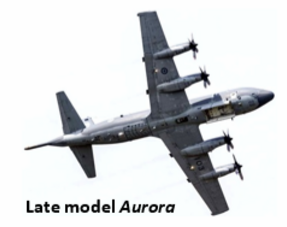
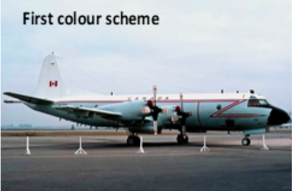
The Museum's aircraft, CP-140A Arcturus number 119 was one of three special aircraft purchased and used primarily at 14 Wing Greenwood for Arctic and coastal surface patrol missions, pilot training and as an instructional airframe. Taken on strength in 1992 the aircraft flew until 2009, was retired in 2014 and installed in the Museum's Air Park in 2016. Squadrons 404, 405 and 415 all flew this aircraft at Greenwood. The three Arcturus aircraft lacked the expensive, heavy and sensitive anti-submarine and anti-surface warfare equipment of the CP-140 Aurora making the Arcturus more fuel efficient for such cockpit crew training as touch-and-go landing practice, general maritime surface reconnaissance (detecting drug operations, smuggling of illegal immigrants, fisheries protection patrols, pollution monitoring, search-and-rescue assistance and Arctic sovereignty patrols. Time expired Arcturus aircraft numbers 120 and 121 are now stored in the dry-air desert in Arizona awaiting future decisions on disposal.

Aircraft Specifications
Roles: maritime patrol/anti-submarine warfare (ASW), command, control, communications, computers, intelligence, surveillance and reconnaissance (C4ISR) and search and rescue
Number built for Canada: 18 Auroras and 3 Arcturus
Manufacturer: Lockheed
Crew: 4 min: two Pilots, Flight Engineer and an observer; for missions 10: add 2 Tactical Navigators and 4 Airborne Electronic Systems Operators
Powerplants: four Allison T-56-A-14-LFE turboprop engines (4600 HP) Maximum speed: 750 km/h (466 mph)
Cruising speed: 648 km/h (403 mph)
Service ceiling: 10,668 m (35,000 ft)
Range: 9,266 km (5,000 nm)
Endurance: 14 hours
Empty Weight: 27,892 kg (61,490 lbs
Max Weight: 64,410 kg (141,997 lbs)
Wingspan: 30.38 m (99 ft 8 in)
Length: 35.61 m (116 ft 10 in)
Height: 10.30 m (34 ft)