
Sergeant Donald M. Cornish, DFM
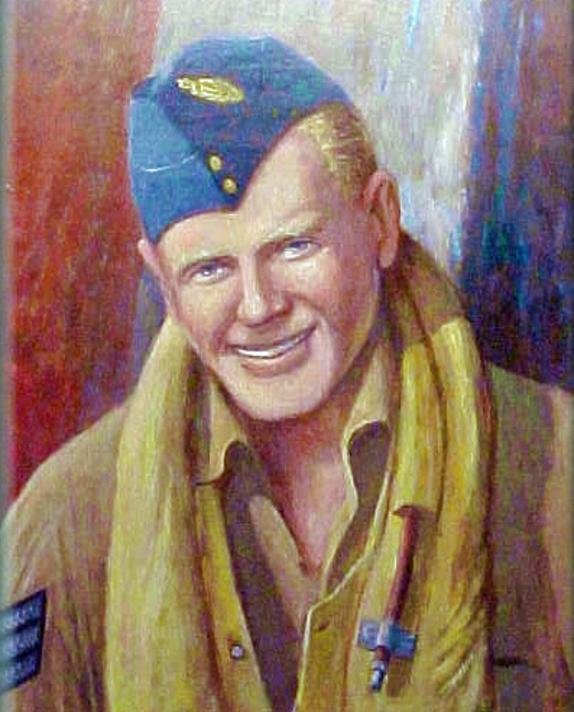
Donald M. Cornish was a native of Scout Lake, Saskatchewan. He enlisted in the RCAF in Regina on 23 May 1941. He trained at 4 ITS then at 5 EFTS and finished at 10 SFTS in Manitoba where he received his wings and Sergeant stripes in January 1942. He is believed to have completed the General Reconnaissance School in Charlottetown before proceeding overseas. Once in the UK, he converted onto Wellingtons before joining 179 Squadron, RAF which was then stationed in Gibraltar.
On 21 October 1943 flying Wellington Z/179, Cornish and crew gained a radar contact. An attack was initiated and at a range of half a mile the Leigh Light revealed an enemy surface ship which began firing on them. They escaped with light damage and continued to patrol. Shortly thereafter a further contact initiated a second attack and the Leigh Light revealed U-431 which fired on them causing some additional damage but they completed the attack. There was no sign of the boat following the attack and, initially, the kill was credited to a ship but later re-assigned to Cornish. Three nights later, on 24 October 1943 Cornish and crew on night patrol in A/179 homed on a radar contact down to half a mile. The moonlight was so bright that the submarine’s wake was visible. Cornish elected to improve his attack position before using the Leigh Light. At a quarter mile they switched on the light and attacked though they were greeted with return fire. The captain of U-566 later confirmed that its steering and propellers were damaged beyond use and they scuttled the boat after boarding their dinghies. Cornish received the DFM and was promoted to Warrant Officer. A month later, on 26 November 1943, Cornish and crew flying H/179 from the Azores encountered U-542 and attacked, straddling the boat with six depth charges. But they had no further contact. It was confirmed many years later that they had sunk it on its first war patrol. Cornish and crew did indeed sink three submarines, all at night using the Leigh Light – a first. An outstanding record.
Donald Cornish left the RCAF at war’s end as a Flying Officer and returned to Saskatchewan, but in 1947 he joined the RAF and continued flying for the next eighteen months before leaving the RAF. He married an English girl, gained employment with Hawker-Siddeley and remained in England.