
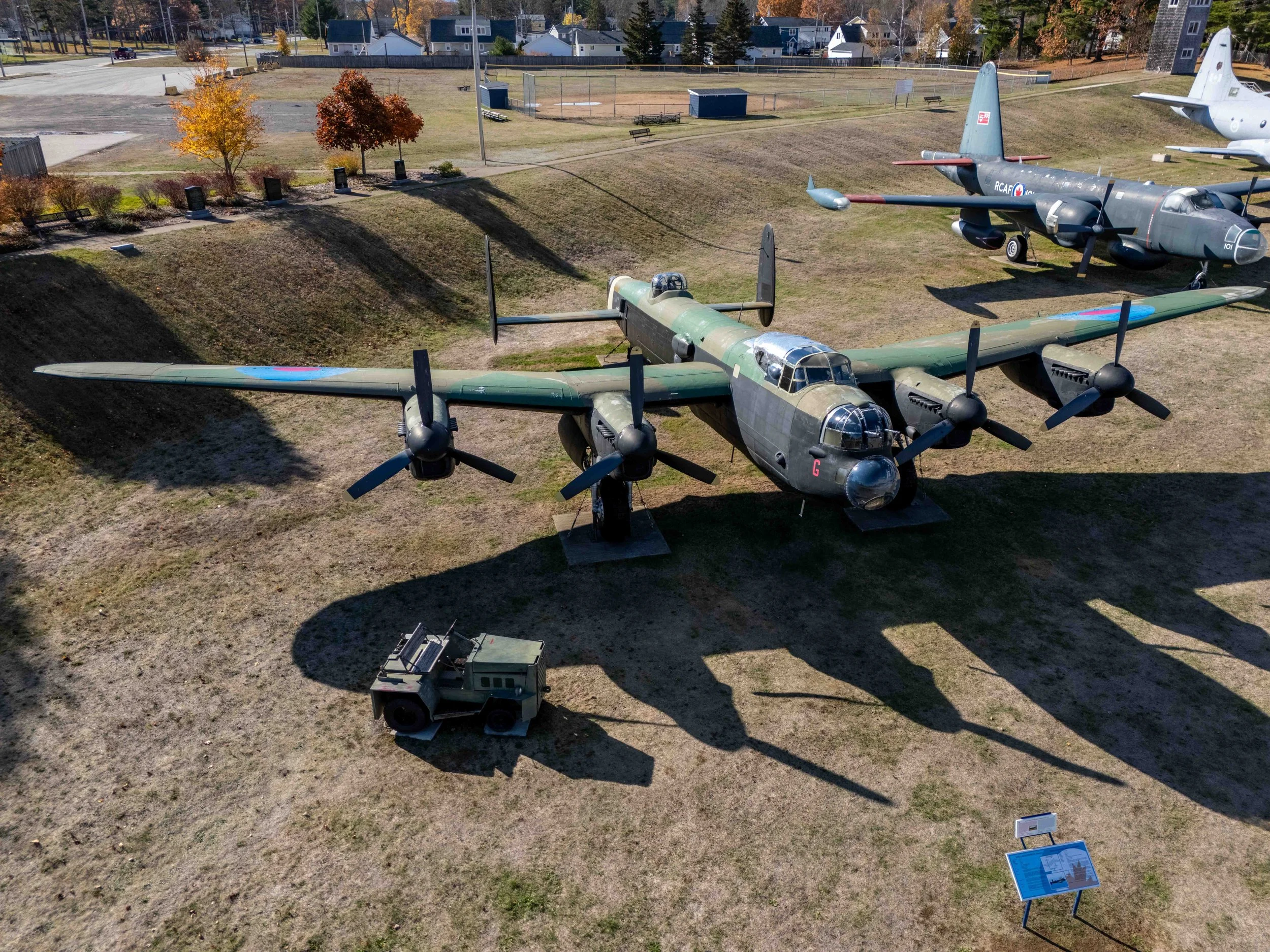
Avro Lancaster Mark X
WORLD WAR II HISTORY
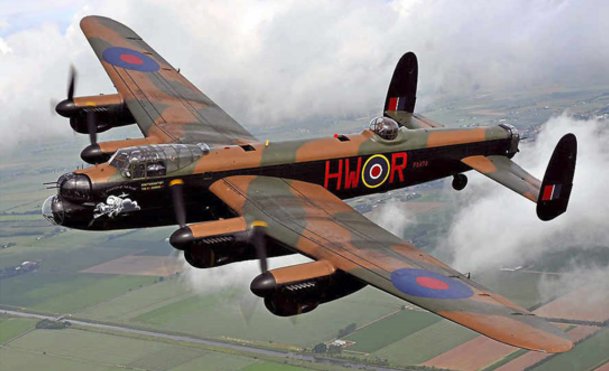
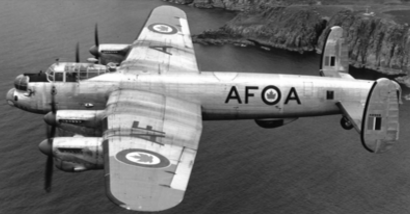
In September 1941, a decision was made to build Lancasters in Canada, an immense challenge as some 500,000 manufacturing operations were involved for more than 55,000 separate parts. A Crown Corporation, Victory Aircraft, was formed to do the work in Malton, Ontario. Eventually, 430 Mark X's were built and assigned to No. 6 Group, the RCAF component of Bomber Command. By late 1944, No. 6 Group operated thirteen Lancaster squadrons. This aircraft was the most successful bomber of the RAF and RCAF, with a speed, ceiling and lifting power of no other aircraft, carrying 64% of the tonnage dropped by the RAF and RCAF and the only bomber capable of carrying the 12,000 lb "Tallboy" and 22,000 lb "Grand Slam" bombs. The aircraft won a place in history with the daring and precise bombing raids on the Ruhr Dams and with the sinking of the German battleship Tirpitz. Lancasters flew a total of 156,308 sorties, dropped 608,612 tons of bombs and placed over 12,000 mines in enemy waters. Of the 7,377 built, 3,349 were lost in action and a further 487 to other causes, such as training accidents.
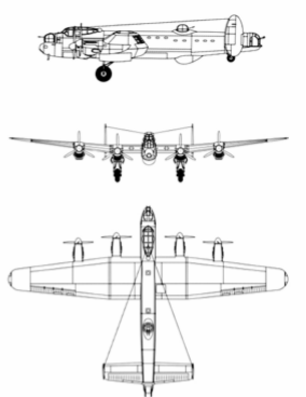
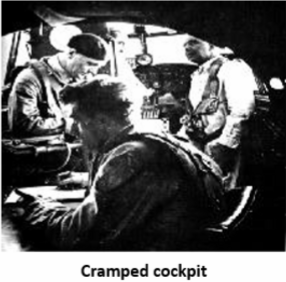
Built specifically for heavy bombing, crew comfort and security were secondary consideration. The massive bomb bay stretched for 33 feet and, unlike other bombers, was one continuous uninterrupted space, allowing carriage of large bombs, but with wing spars above them restricting movement within the aircraft for its seven crew members - Pilot, Flight Engineer, Navigator, Wireless Operator, Bombardier/Front Gunner, Mid-Upper and Rear Gunner - wearing heavy flying clothing and already working in cramped conditions. Normally flying at night, the aircraft had virtually no defensive armour against enemy aircraft, only eight .303 calibre machine guns. The Museum's aircraft, Lancaster KB839 was built in 1944, serving with 419 "Moose" Squadron of 6 Group, flying 26 missions with nine different crews. Throughout WW II, aircraft were transferred from one Squadron to another, as operational demands dictated. Continuing the GMAM's mandate to honour Station Greenwood's airmen and squadrons, the Lancaster LQ-G "Gutless Gert" has been restored to commemorate the brave wartime crews of 405 Pathfinder Squadron for its last 17 of 60 missions. On her 61st mission, during the night of 17/18 November 1943, she was shot down while on a raid against Ludwigshaven, a city on the Rhine in the industrial heartland of Germany.
POST-WAR HISTORY
Flown back to Yarmouth, Nova Scotia 10 June 1945, the aircraft that was to become "Gert" was one of more than one hundred Canadian-built Lancaster Mk X's placed in storage and modified to nine different configurations. While most served in maritime reconnaissance roles, others were modified as bomber reconnaissance - armed with depth charges, aerial photography, search and rescue, navigation training, or as test beds for jet engine training. Fourteen were modified for aerial and photo reconnaissance work and did much of the mapping of northern Canada. "Gert" and two others had extended noses for special cameras doing photo and mapping work, serving with 408 "Goose" Squadron, operating in Canada's northern regions.
When the Korean War began, the RCAF selected the Lancaster to fulfill its anti-submarine taskings and over 70 aircraft configured to the MR/MP (Maritime Reconnaissance/Maritime Patrol) specifications. Radar and sonobuoy operators' positions were installed and the rear and mid-upper gun turrets removed. A 400-gallon fuel tank was placed in the bomb bay to increase the aircraft's patrol range, and provisions were made for a Co-pilot. Upgraded electronics, instrumentation and a new paint scheme completed the conversion, which served throughout the 1950's until replacement by the Lockheed Neptune. The Lancaster was ceremoniously retired from RCAF service at RCAF Station Downsview, ON (Toronto) April, 1964. Today, only 17 Lancasters survive in the world, just two in flying condition.
Aircraft Specifications
Roles: bomber, maritime reconnaissance/patrol, aerial photography, search and rescue, navigator training, testing
Number built for Canada: 430 Lancaster Mark X
Manufacturer: AVRO/Victory Aircraft
Crew: 7
Powerplants: four Rolls-Royce or Packard MERLIN 12 cylinder engines of 1240 HP or 1620 HP turning 3-bladed propellers.
Maximum speed: 207 miles per hour (180 kts/333 kilometres per hour)
Cruising speed: 160 miles per hour (140 kts/257 kilometres per hour)
Service ceiling: 23,200 feet (7,070 metres)
Range: 2,125 miles (3,420 kilometres)
Empty Weight: 16,865 pounds (7,650 kilograms)
Max Weight: 25,200 pounds (11,430 kilograms)
Wingspan: 95 feet 0 inches (28.96 metres)
Length: 64 feet 5.5 inches (19.65 metres)
Height: 16 feet 11.5 inches (5.17 metres)